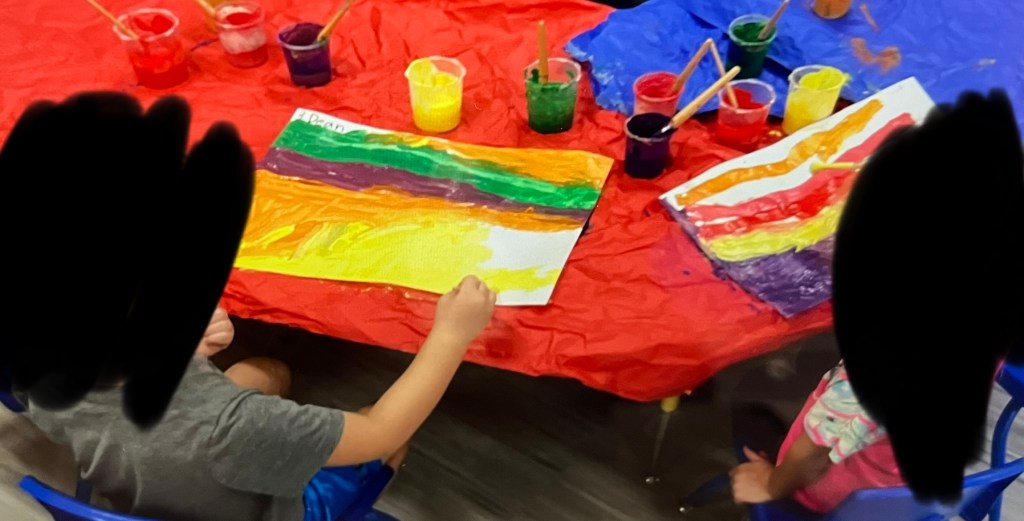
The other week, my preschoolers and I were coloring dinosaur habitats after reading, “We Don’t Eat Our Classmates”. Students were using crayons, and as usual, I commented on the process of their creation. “I see you’re making yellow circles” and, “I see you’re using green lines” were just a few of the comments I made.
There was a substitute paraprofessional that day and her student was happily holding a crayon in each hand and adding purple and yellow strokes to his dinosaur habitat’s sky. “Let’s use blue for the sky” she said and I was happy I was nearby. I told her that in our learning space, students create their own art and have the freedom to use any color, shape, size, and material they’d like. Our job is to support their creativity and expression and help provide them materials. I secretly hoped this paraprofessional could return for our reading of Sky Color.

As a child, I was the student who just couldn’t fit in no matter how hard I tried. I loved novelty, being creative, and in a world that is not always supportive of creativity and individuality, it often got me into some sticky situations!
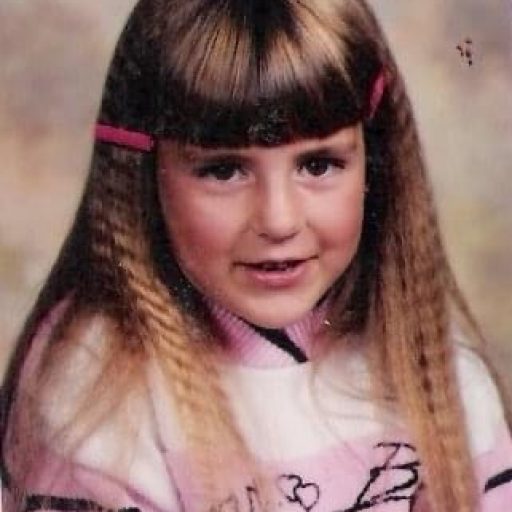
My second grade teacher in particular, did not appreciate my creative spirit. She loved a girl in my class who always paid attention and knew the answers to her questions. The teacher smiled anytime this student talked while looking annoyed anytime I participated. I was not very good at figuring out what I was supposed to be doing. I wished I was like the other girl who never got herself into the kind of trouble I couldn’t seem to avoid.
We often had coloring pages where we solved simple equations and the answer determined what color we used for the image. As a 7-year-old, I found this to be a dreadful way to color a picture and was growing tired of the worksheets where the sun was yellow, the grass was green, and I was BORED with a capital B.
One day we had a a picture of a bunch of fruit we were supposed to color. 8-4=4 and 4 is yellow so the banana had to be yellow. Little me rebelled. Gosh darn it, I didn’t want to color a boring yellow banana! No, I wanted my banana to be different. Interesting. Unique. I made my banana red! A red banana! Delightful!
I was inspired! I made the grapes blue. The watermelon black. The cherries green. The apples purple. For once, I loved my drawing. It wasn’t anything like anyone else’s and it brought me joy.
As I turned it into the completed work basket and saw the stack of papers with orange oranges and yellow bananas, it occurred to me that my little act of rebellion was likely going to cost me.
I was right. My teacher was not impressed! She immediately pulled my paper from the basket on her desk and in front of the class said, “Kelly, you need to redo ALL of this! You’ve gotten every single answer wrong. The banana should be yellow, NOT red.” Many of my classmates laughed as she rolled her eyes and set my paper, peppered with red circles, on my desk. One of the smartest girls in my class however, turned to me and asked, “Why did you make the banana red?” This girl saw what my teacher had missed. She saw that I knew the answer and had my own reasons for making my banana red. She was curious and sought to understand my thinking. This is something I try to do in every interaction as a teacher, colleague, parent, and member of society.
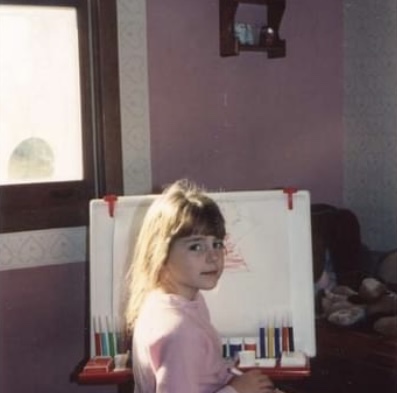

So nonetheless, Peter H. Reynold’s “Sky Color” is bibliotherapy for my inner child.
As I read with students, I asked if the sky always had to be blue. My students said, “Yes” at first, but after reading, and after viewing my Slides presentation of photos of skies without any blue, they agreed that blue is not always a sky color.
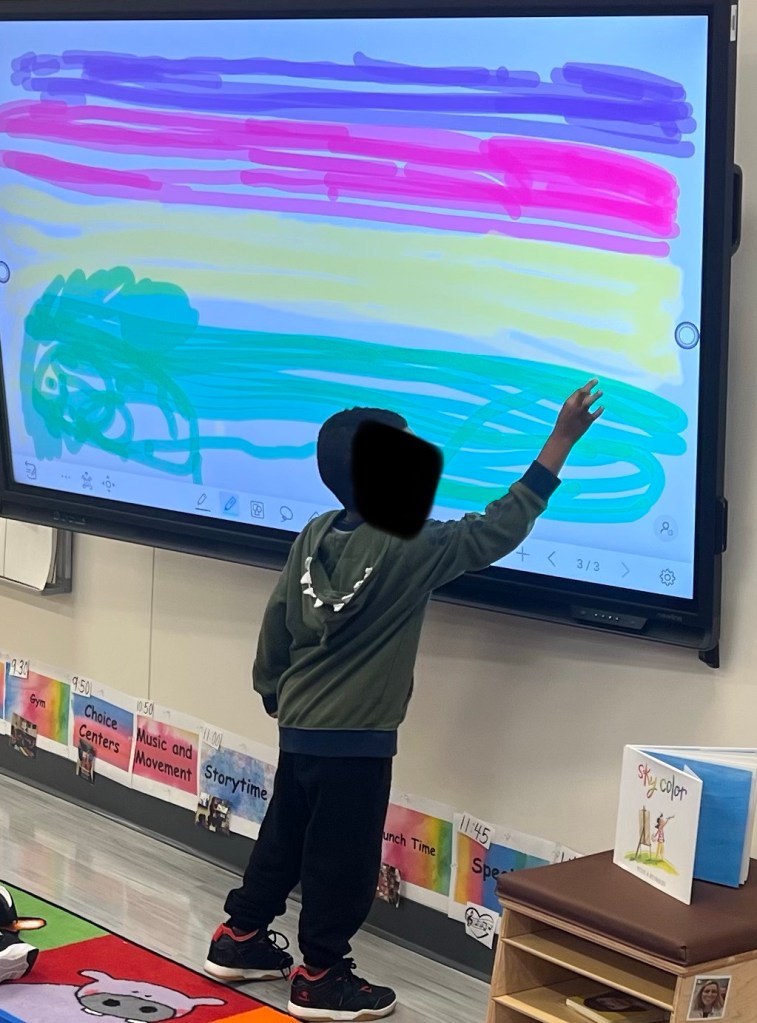
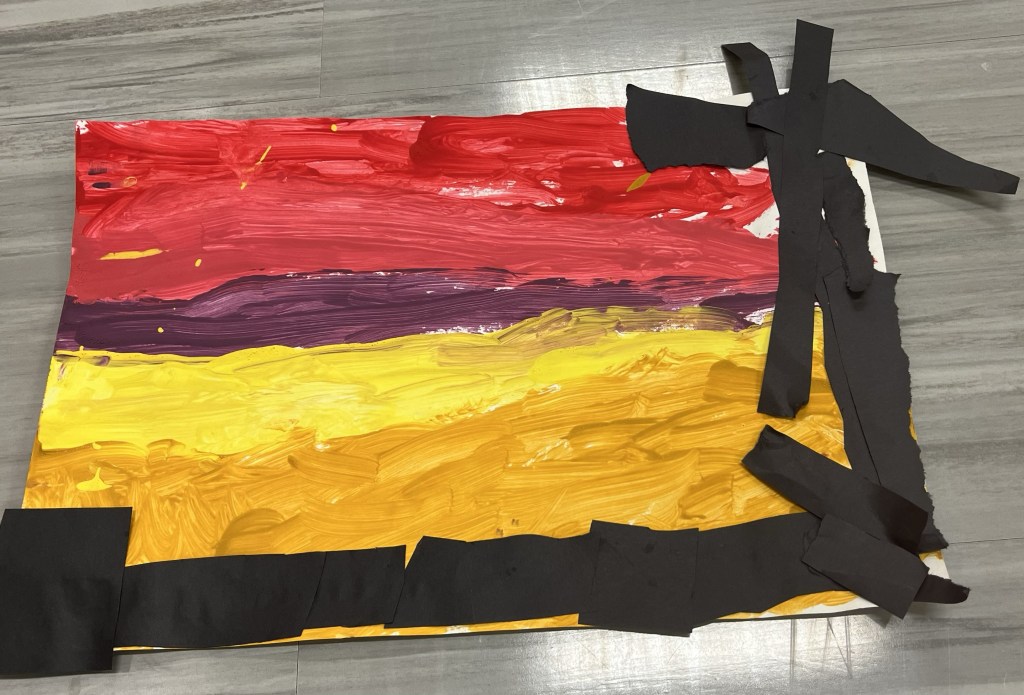
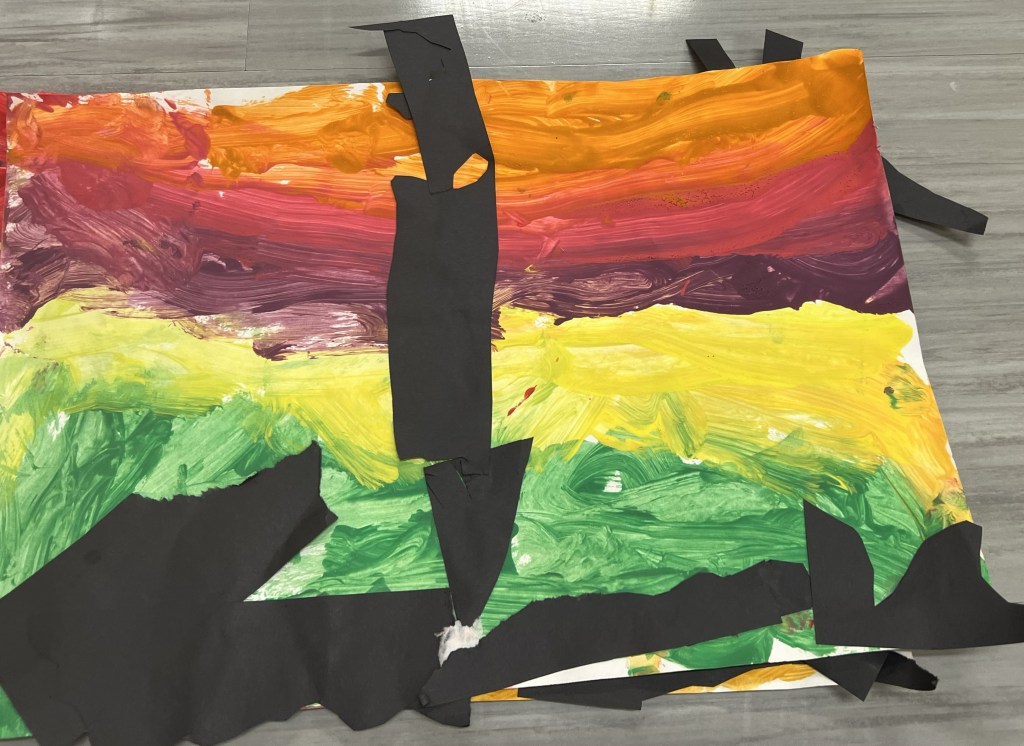
Students then used paint to create a sky of their own. I put many colors on the table for them to use, but just like in our story, we did not use any blue! Students enjoyed painting their landscapes.
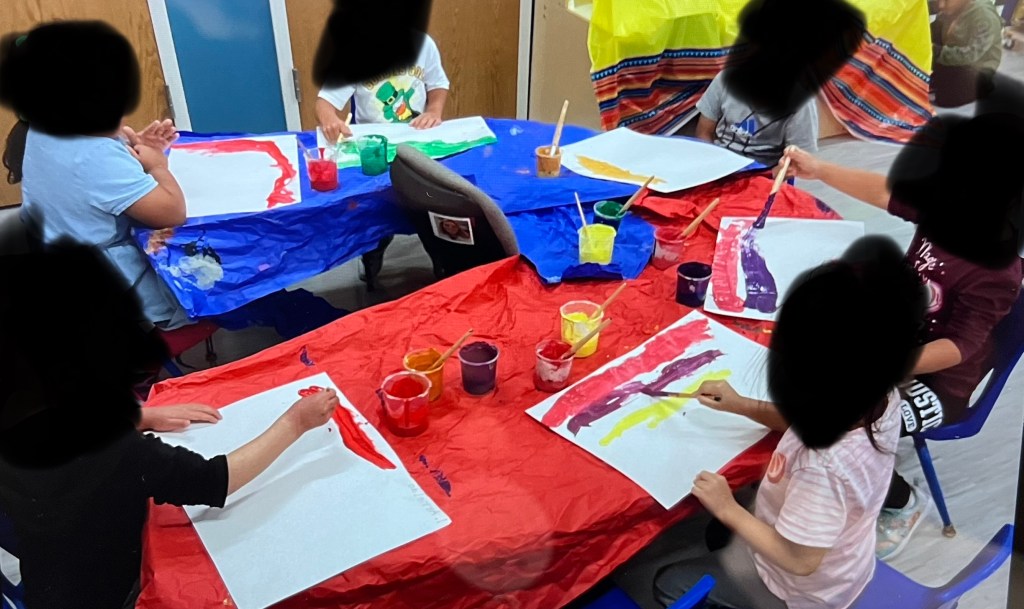
The next day, our check-in question of the day was, “Is the sky always blue?” I’m happy to say everyone answered correctly! “No! It can be purple, orange, and yellow!” was a response an excited girl shared.
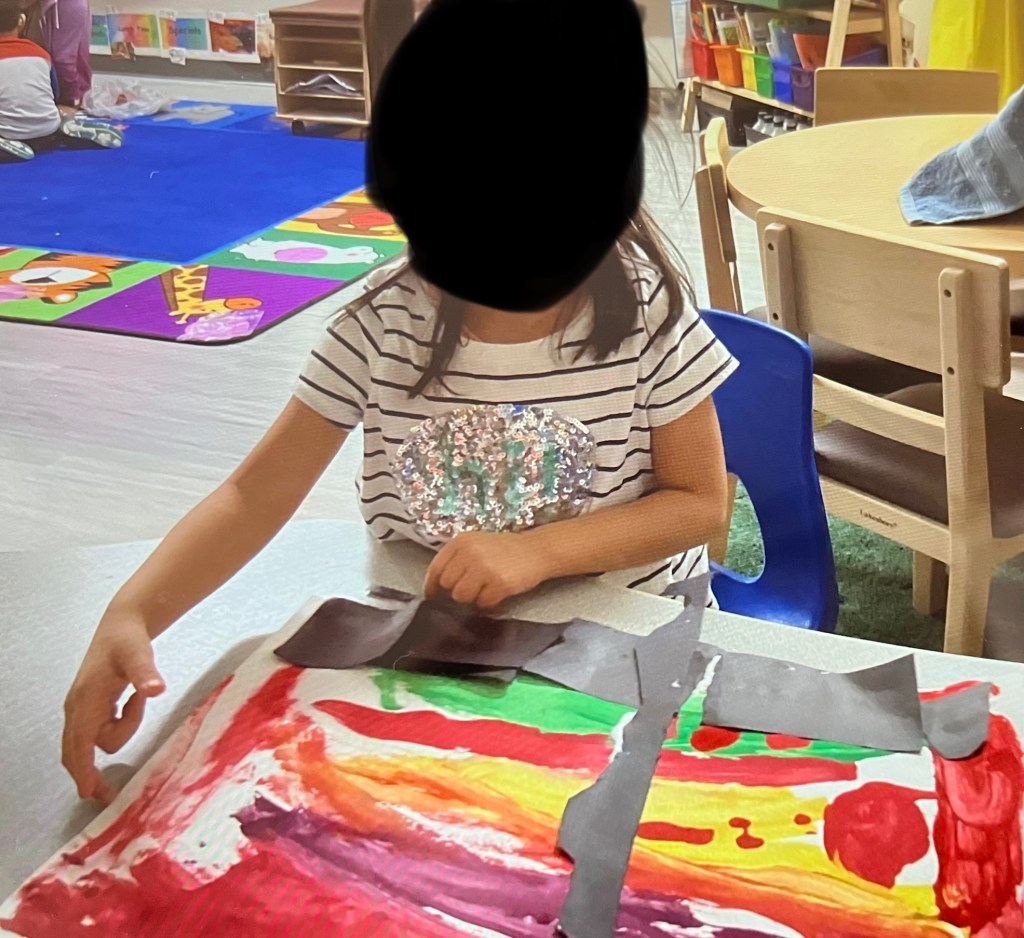
We added silhouetted shapes to our paintings. Students enjoyed snipping and tearing paper and using glue to adhere their black paper to their landscape.
Thank you, Peter H. Reynolds for writing the books every child (and adult) needs!


 Paint and Pages
Leave a comment