I remember the first time I painted with oil paints. I made a mistake in proportion outlining a shoulder in “Venus de Milo” and was delighted when I found I could simply blend and go over the error. How forgiving! This opened up a whole new process of error-making and forgiving, something acrylic paints just couldn’t do with such smoothness and ease.
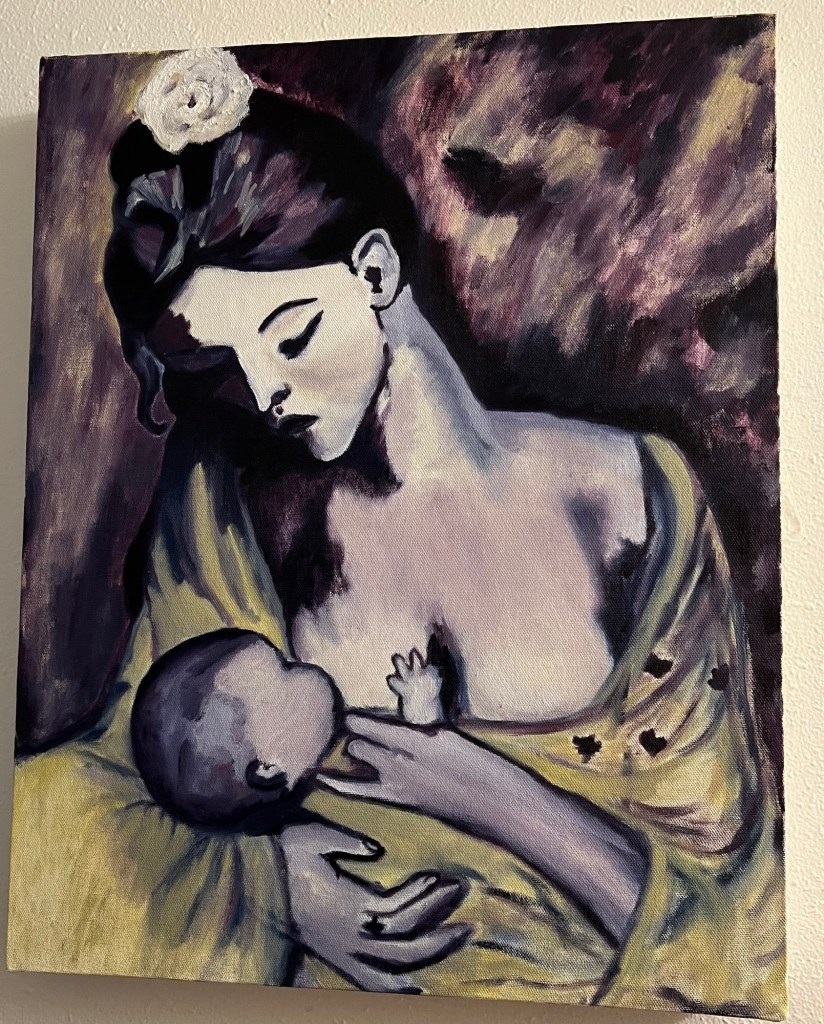
I was a freshman in college at the time and was taking as many art classes as I could while obtaining my general education credits. The art classes were my favorite. I loved the smell of the linseed oil. I loved spending time listening to classical music and imagining over a canvas. I loved going to bed at night thinking about a painting and waking up in the morning excited to meet a painting. I was nowhere near the best artist in class but that didn’t keep me from loving art.
Art is something I just really enjoy, no matter how goofy and out of proportion my final product tends to be. And it tends to be pretty goofy, kinda like me.
Structuring art time in my full-day preschool program this past year has been an evolving process. Initially, I structured art whole group, but felt this did not give students the support and freedom to really engage and explore the process. I was too busy running around helping to do much other than run around and help! So I decided to take a small group of students during one of our choice center blocks, the time when students can play in centers of their choosing.
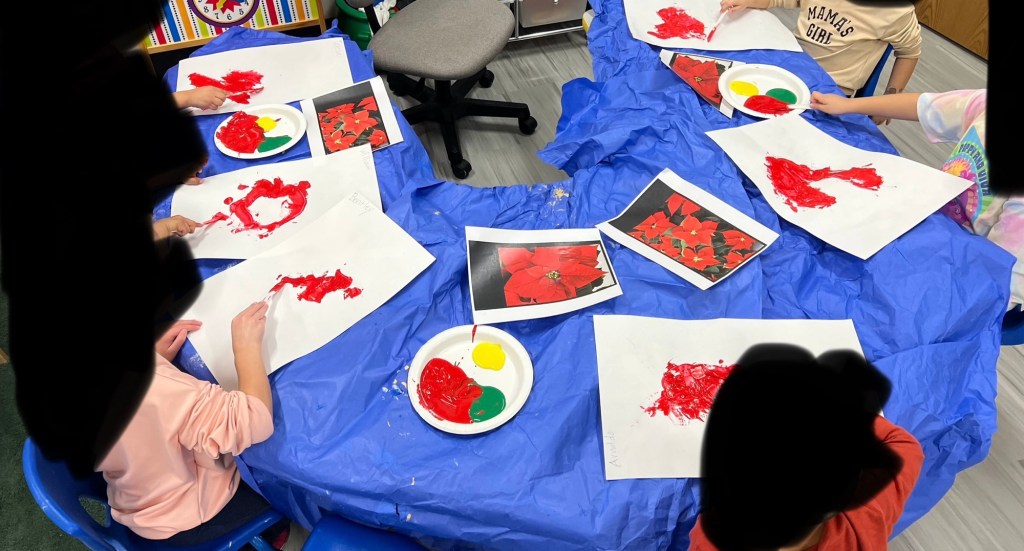
This switch gave students more time to explore art. If they wanted to spend twenty minutes painting, they could and I’d take the next group in the half hour before specials or move it to the next day. There was no rush and I was able to engage with students while they were creating.
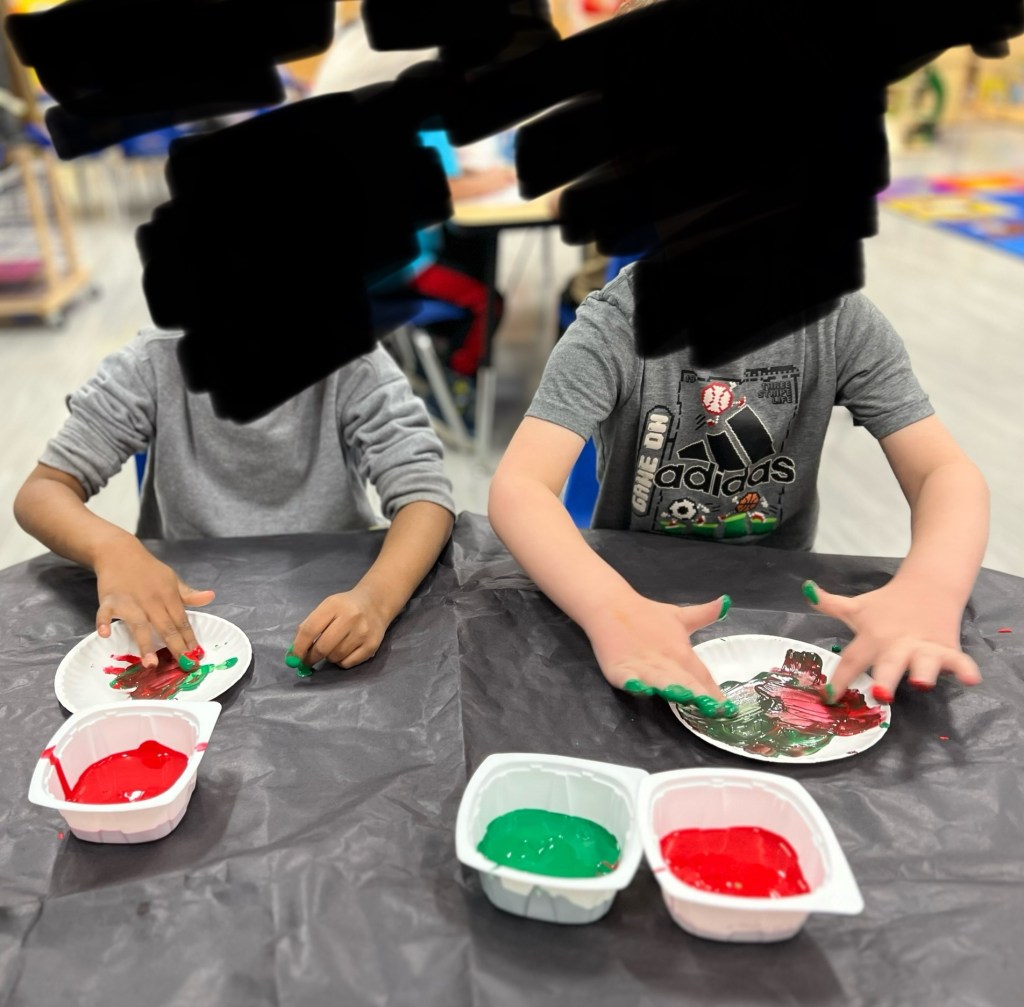
I was also able to make keen observations. I noticed that students often spent much less time and effort coloring with crayons or broad tip markers than they did painting with a brush. The same students who said they were finished after coloring for two minutes with crayons would spend twenty minutes painting with temperas and have to be pulled away when it was time to clean up for lunch.
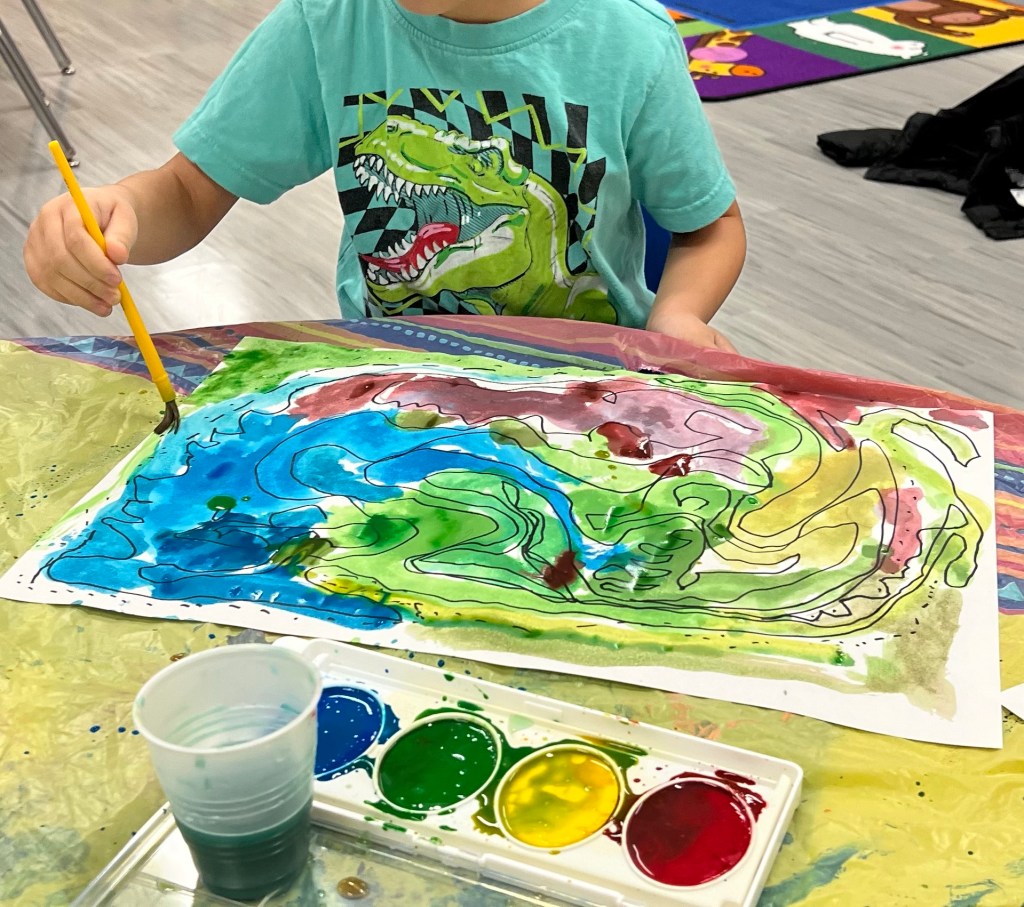
So, I began to challenge my thinking about the art materials I provided my preschool students. Does it have to be finger paint and crayons? Could preschool children use nicer brushes and ink? Charcoal and oil pastels?
We are very fortunate that our school provides a large resource room filled with an abundance of paint, markers, watercolors, crayons, scissors, construction paper, poster board, glue sticks, and glue. These are wonderful materials for independent preschool art as they are nontoxic and washable and I am so grateful they are provided by our school.
But what if I introduced fine art materials to my students in a small group? Would preschool students benefit from going beyond broad line markers?

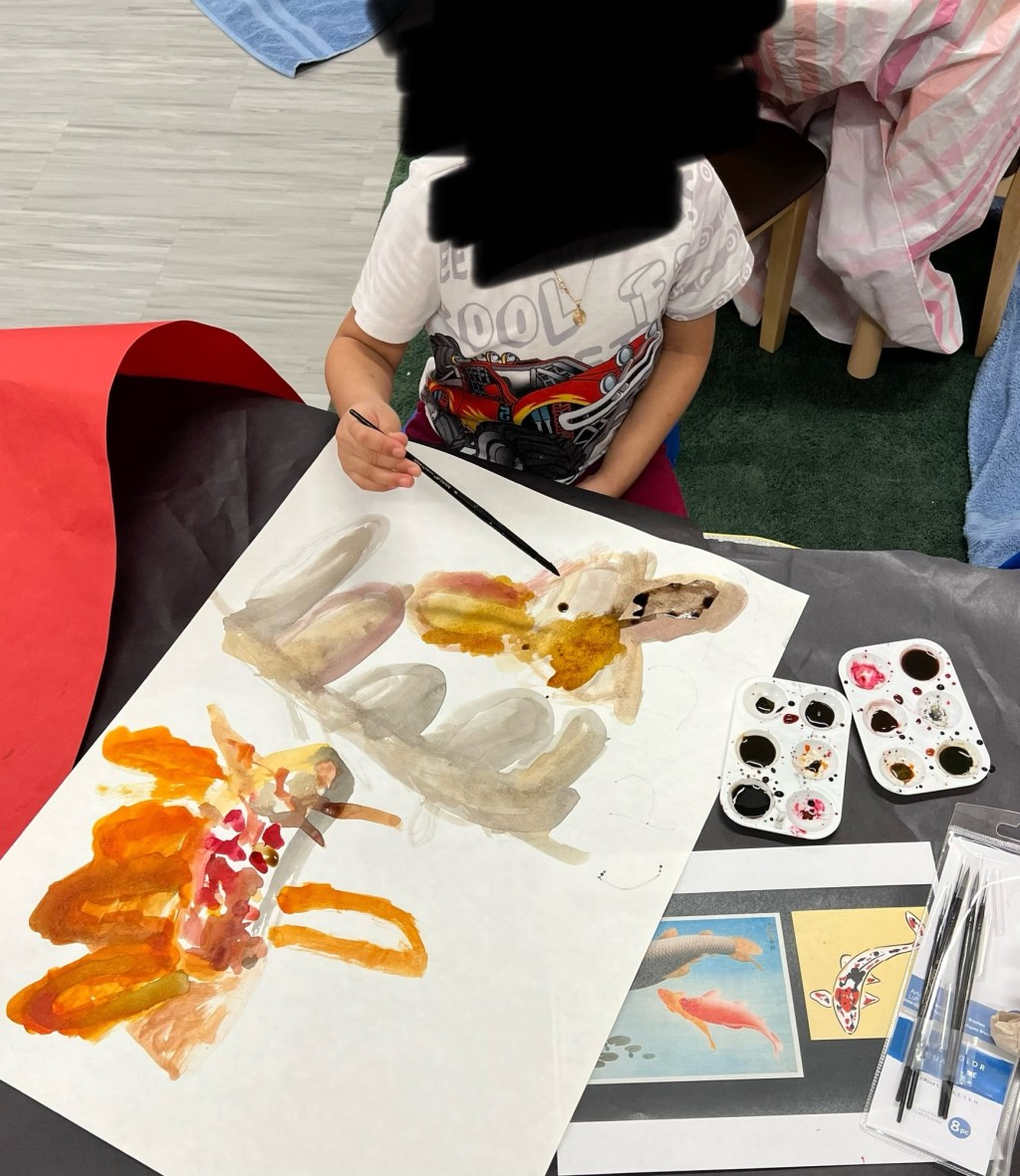
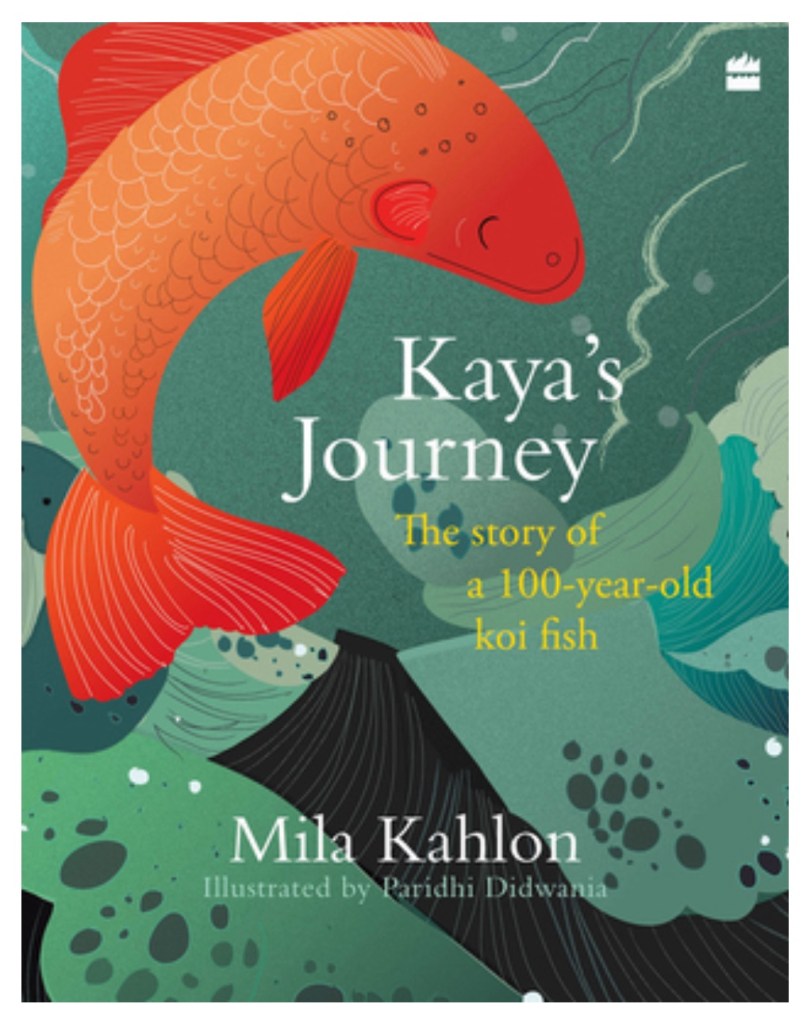
I had received a gift card to a chain craft supply store and decided that I would use it to diversify the preschool palette. We were studying ice fishing, which led to a study of fish and then koi fish. I wanted students to experience the satisfying thrill of painting an extended line with ink on a long brush. Koi fish were the perfect subject for this long fluid watery movement.
So after viewing a slide of koi fish, modeling for my students how to “see” like an artist by following the lines with your eyes, I called students to our horseshoe table in groups of three. I gave them a huge sheet of posterboard paper, long brushes, and three colors of ink: black, orange, and red with dark and diluted versions of each color. I also printed koi fish photographs as models for my students.

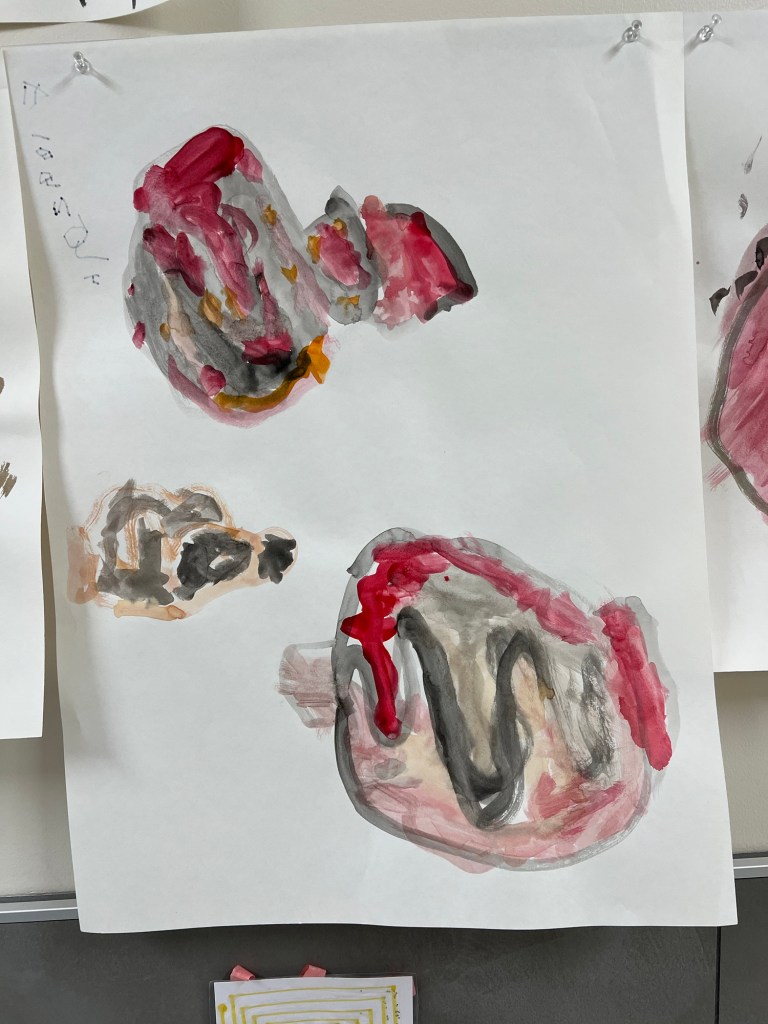
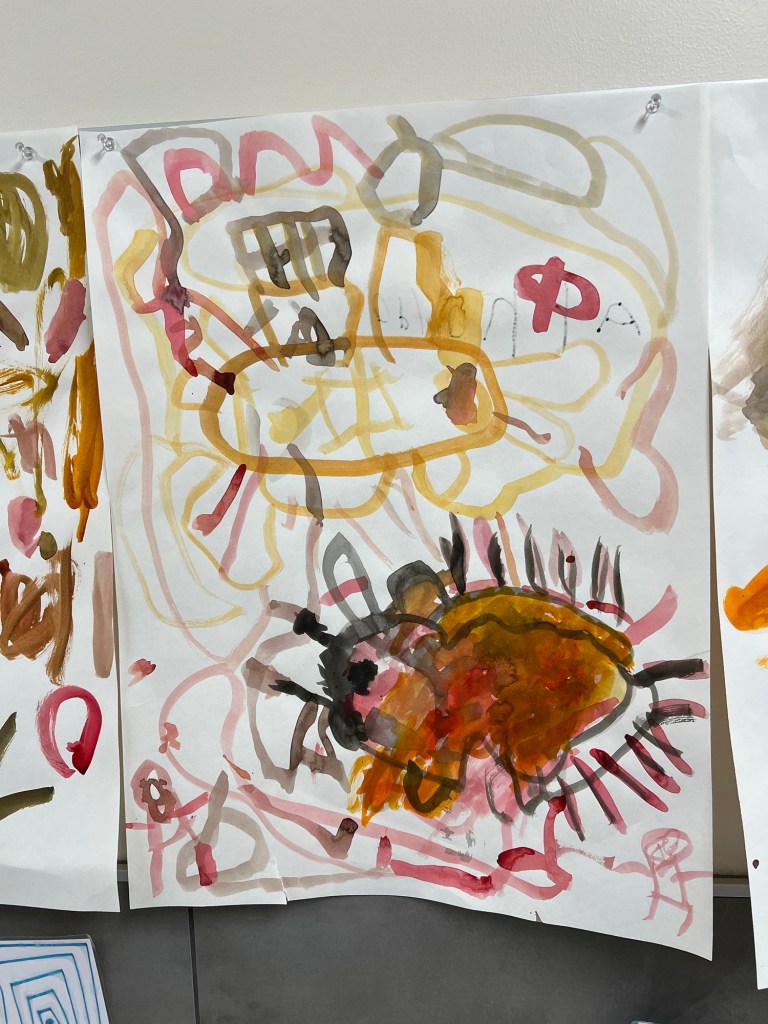
The students were mesmerized! I sat still as a statue not wanting to break their concentration. Students who loathed being asked to draw their family with crayons and markers were suddenly so engrossed in the process of creativity that they ignored everything around them. It was remarkable! What I had planned to take one day ended up taking four days. One of those days happened to be the day of my scheduled performance observation, which, for non-teachers reading this post, is basically the nerve-wracking time when a superior evaluates our teaching. I wondered if I should do something else in case my administrator wasn’t a fan of small group art extending over multiple days. I decided I’d take my chances as I felt strongly about the cognitive benefits this small group art experience afforded my preschool students.


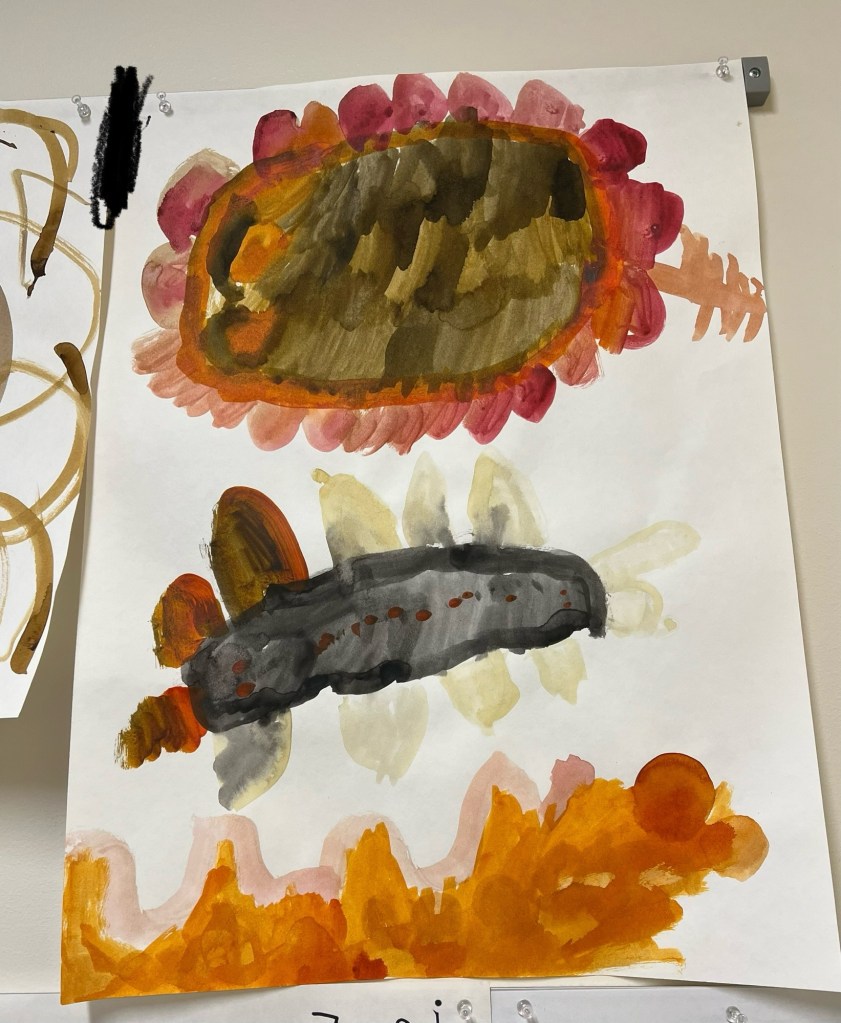
In preschool, most of our assessment takes place through observation. We want students to attend and engage with their surroundings. We want students to persist when solving challenging problems and be flexible in their thinking. We want students to find solutions to problems and increase their ability to sustain attention on a given task. Art ticks all of these boxes!
Additionally, art is accessible to everyone. It doesn’t matter if we only know a handful of words in our teacher’s language. It doesn’t matter if we paint everyday or if this is our first time ever holding a paintbrush. It doesn’t matter if we’re struggling to write our name or beginning to read; everyone can create art. Everyone.
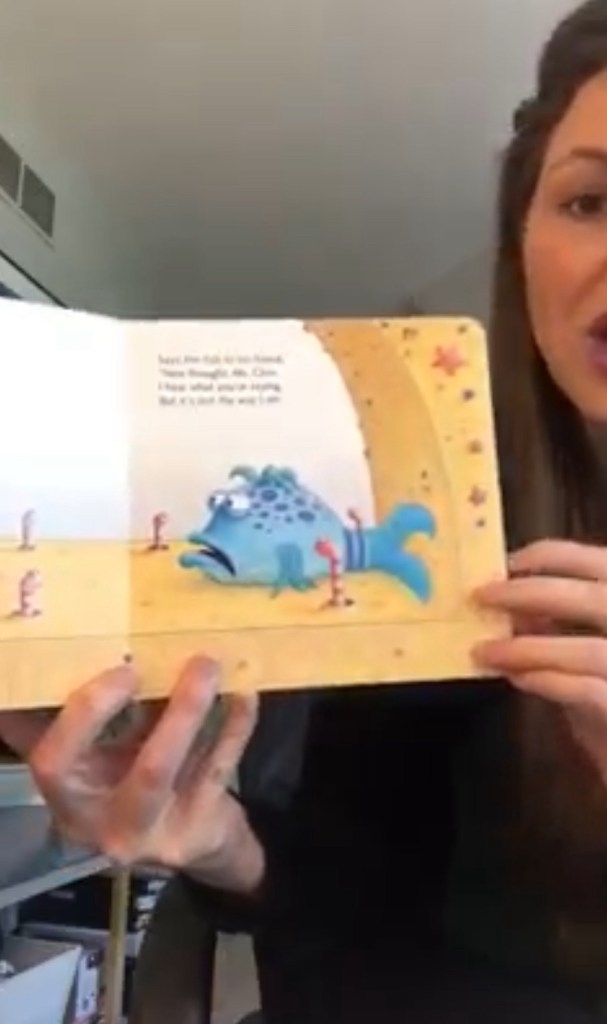
The observation went well. I borrowed the concept of a “singing read aloud” from musician and educator Stephanie Leavell and sang/read, “Pout-Pout Fish” to my students. We then selected a card with an animal for Casper Babypant’s song, “All the Fish”. Students enjoyed taking turns as different animals and running into the center of our circle when their animal was called.

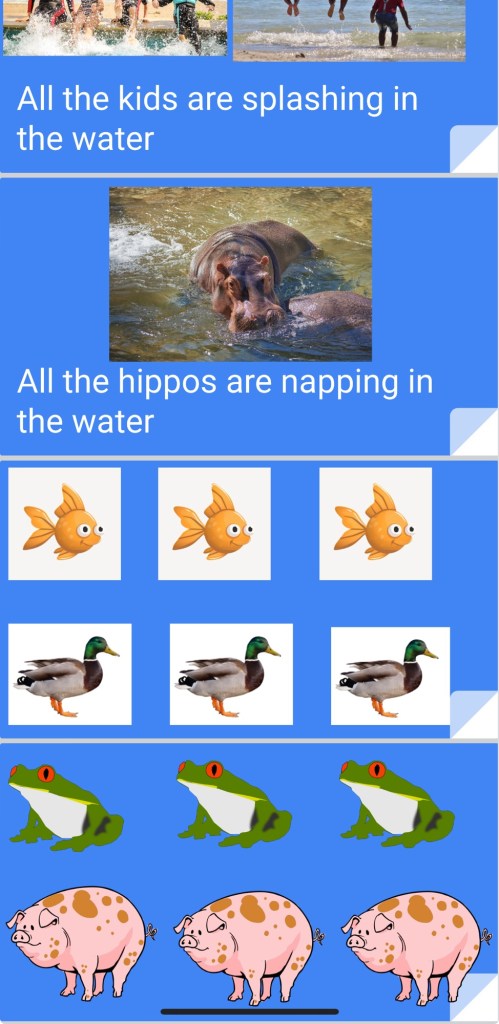
Following the story and song portion of the lesson, we began afternoon choice centers and I took a group of three students to work on their koi fish ink painting. “Is it my turn to paint today?” a boy who despised drawing with crayons asked. “It is!” I told him and he smiled ear-to-ear. My supervisor was in awe as she watched students paint. As I had recently accepted a position as a university professor, she asked if I’d please share the name of these art materials with my colleagues so they could be used in the future. I told her I’d be happy to do so and felt fortunate to have such supportive administration.
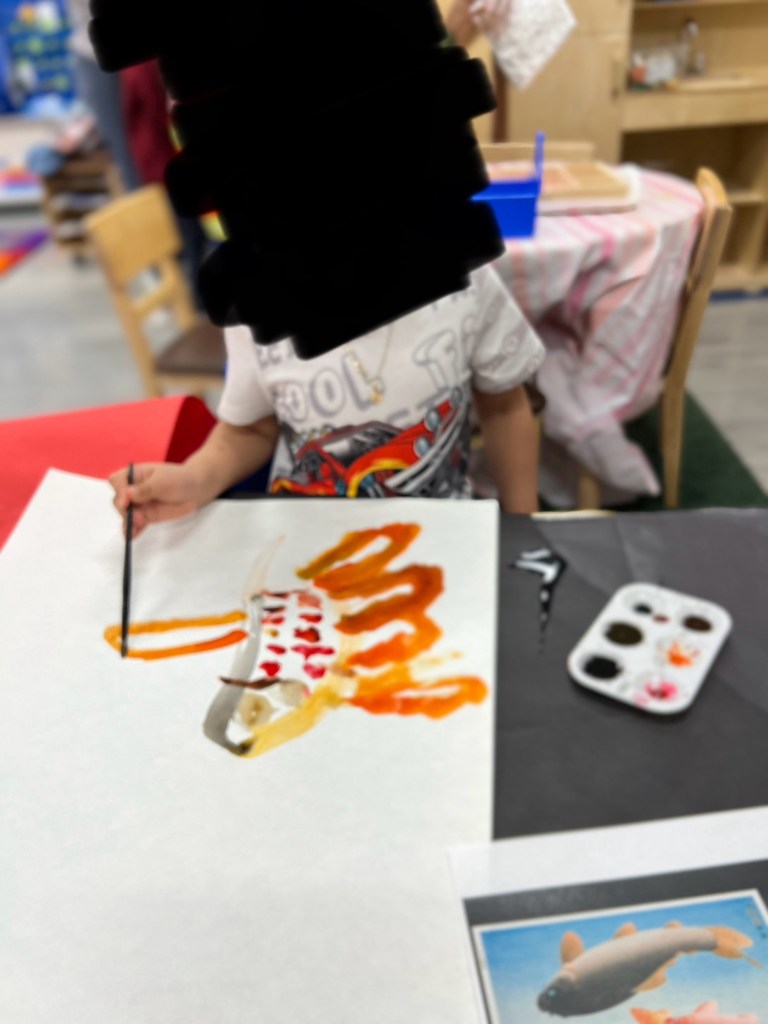
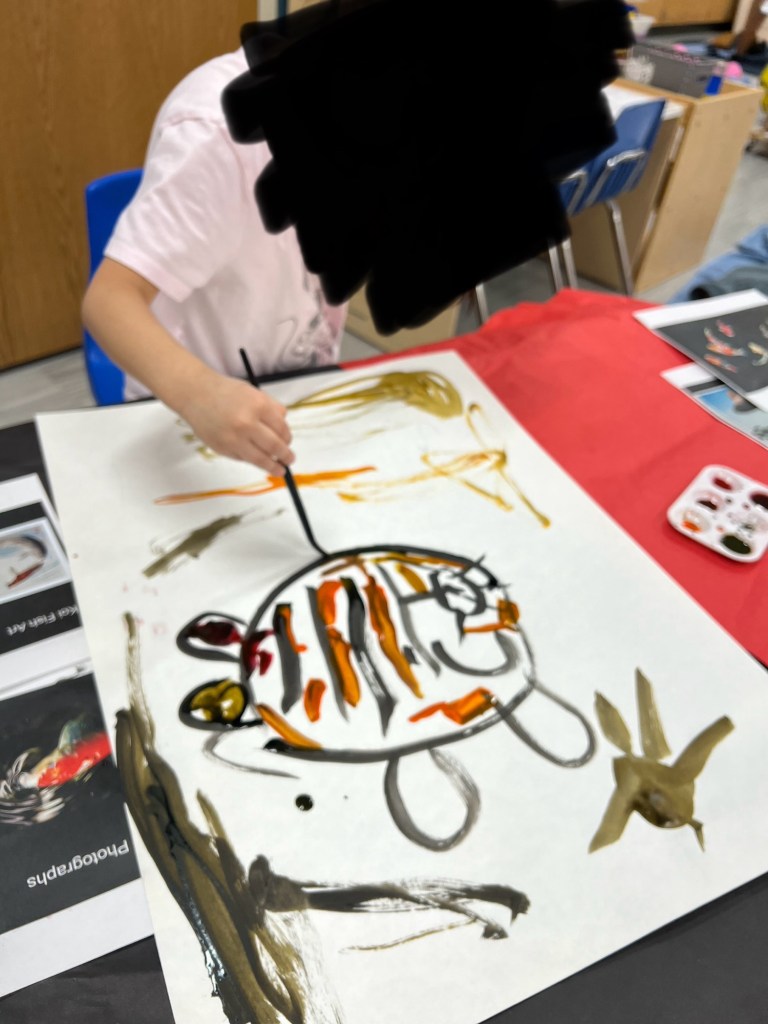
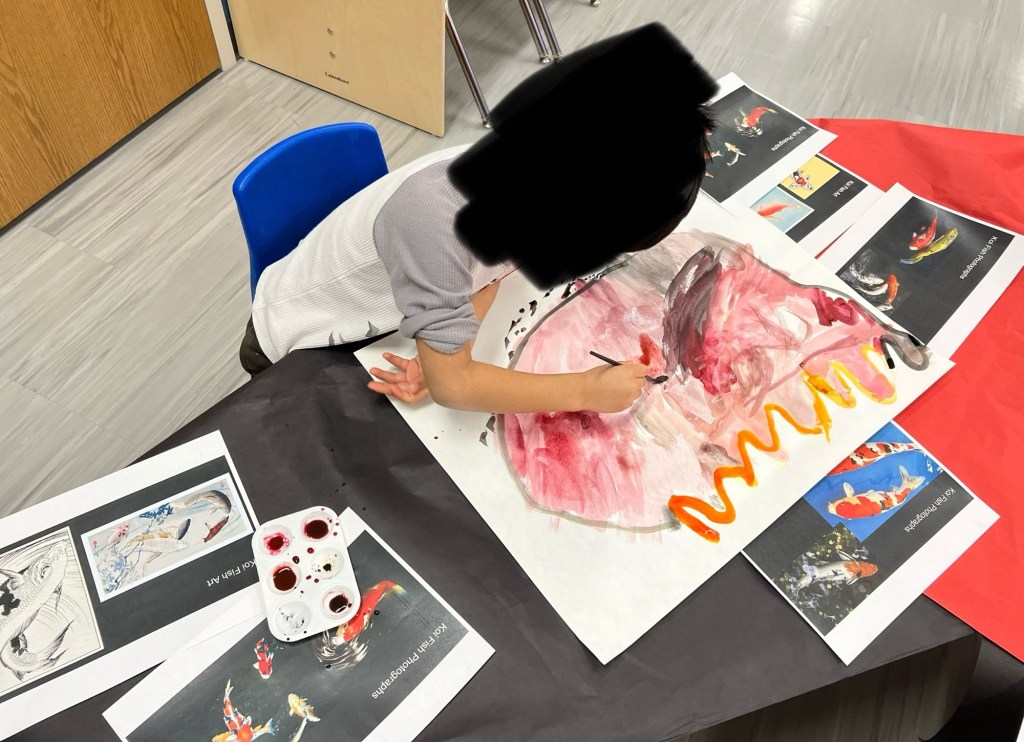
I once saw a meme that said, “Teaching is the only profession where you steal supplies from home and bring them to school.” This is funny because it’s true! And following our colored ink koi fish adventure, I decided to bring more fine art materials to my students.

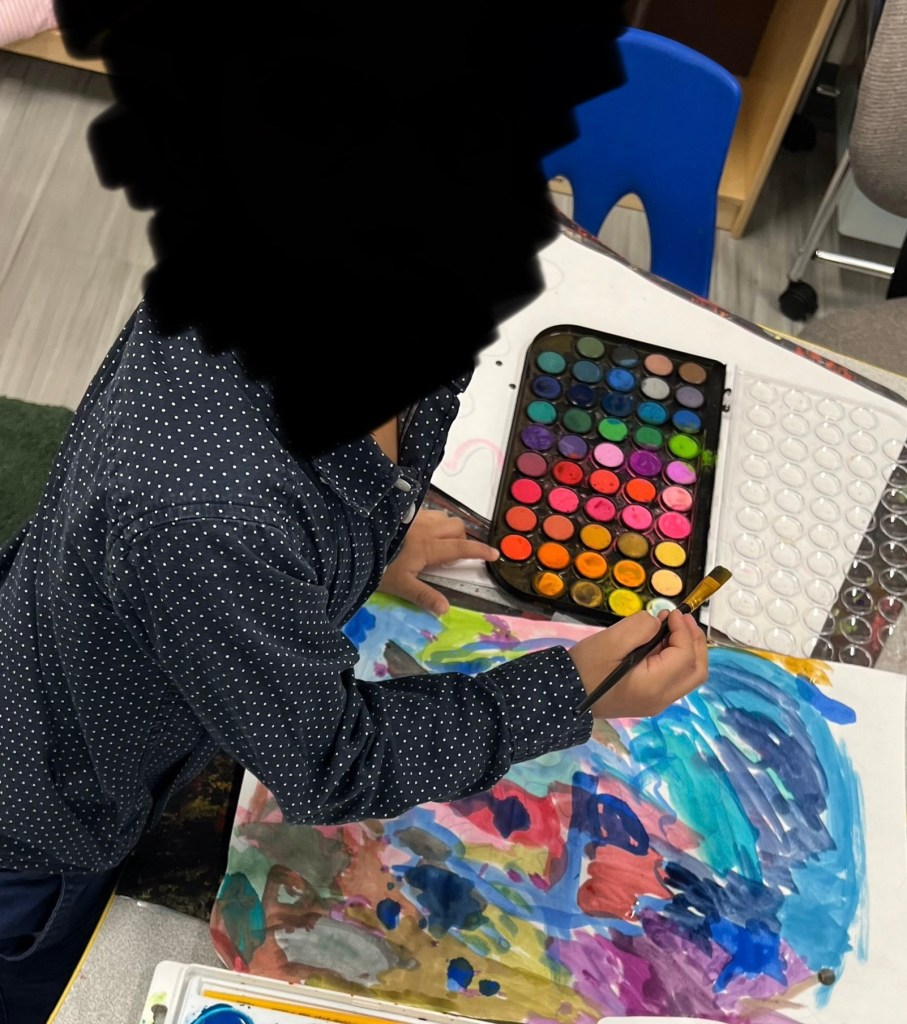
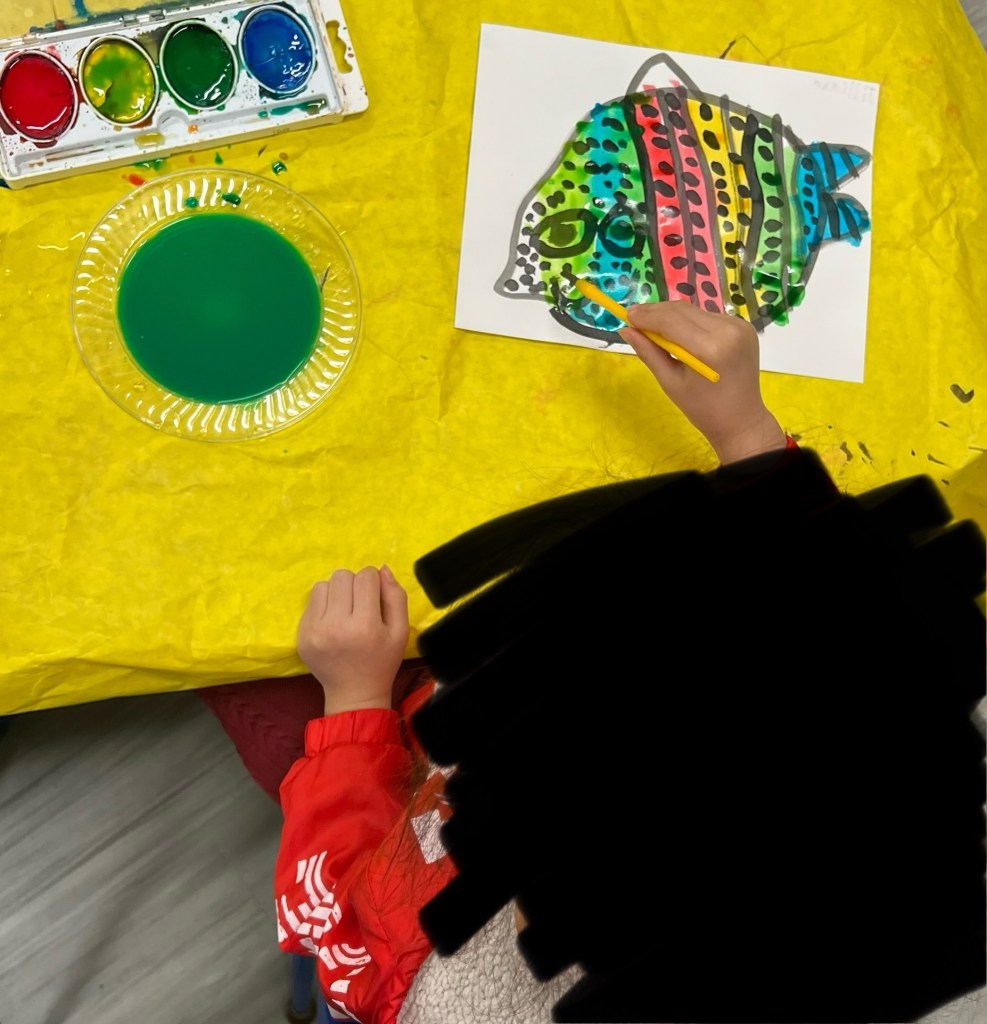
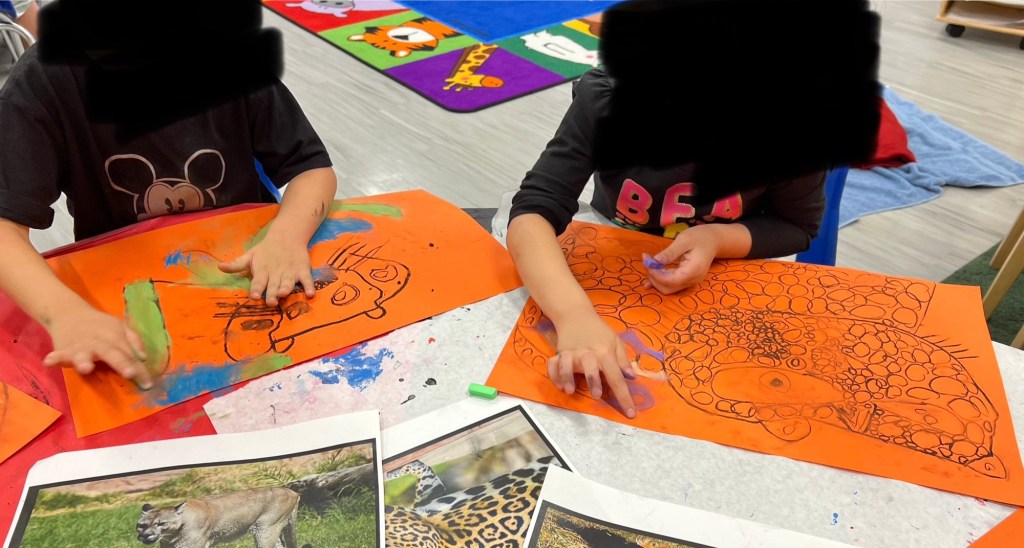
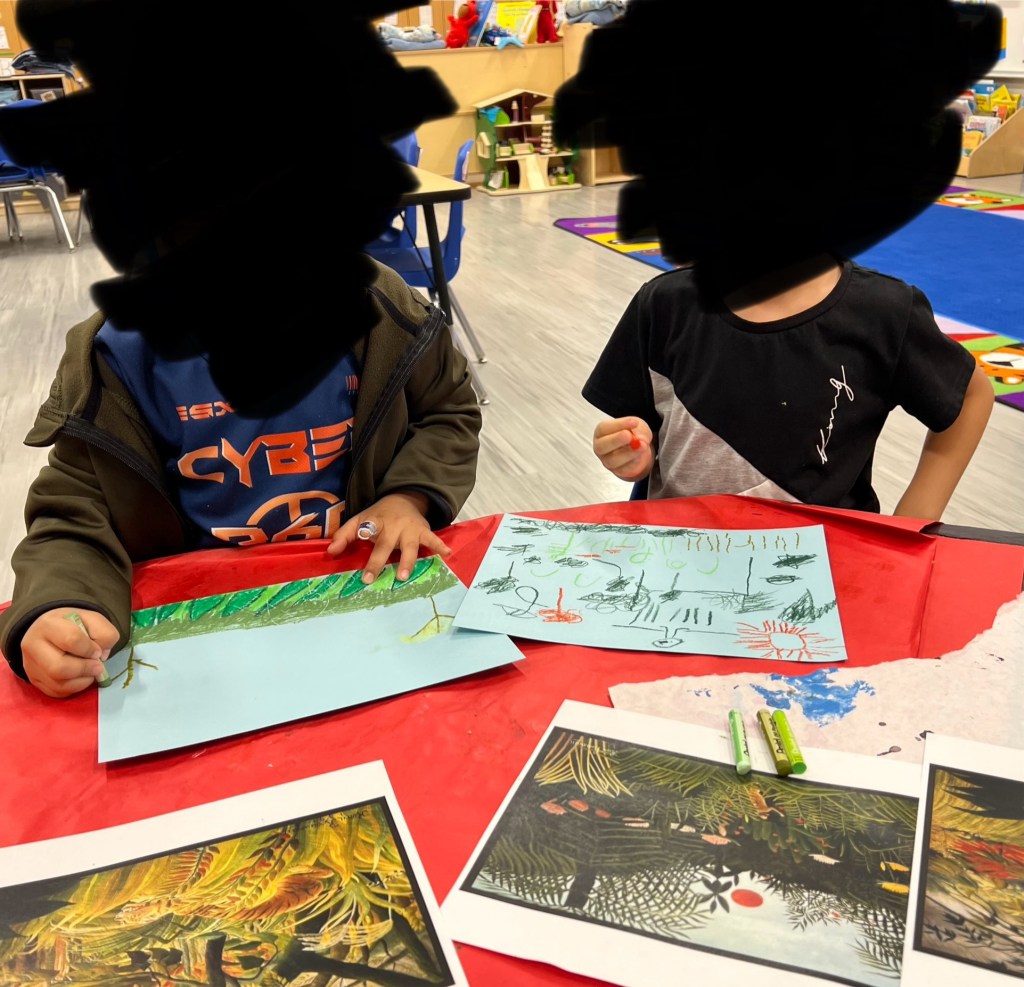
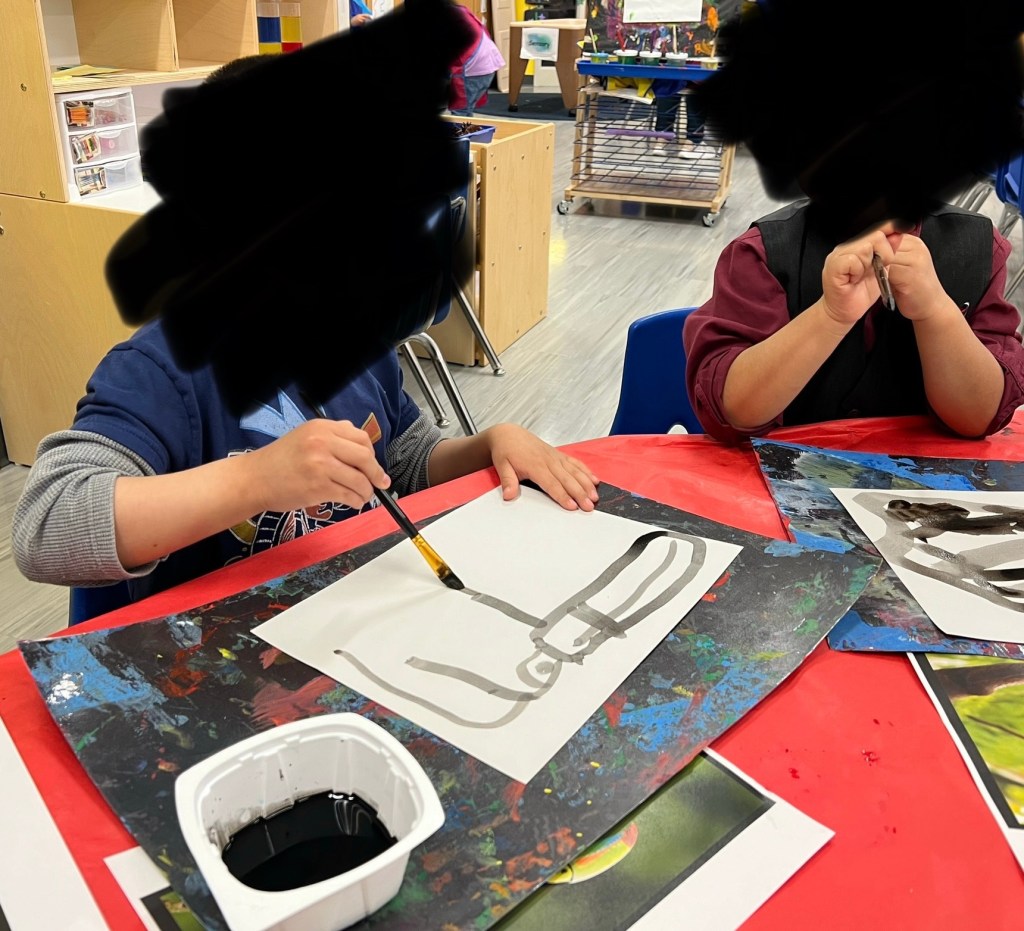
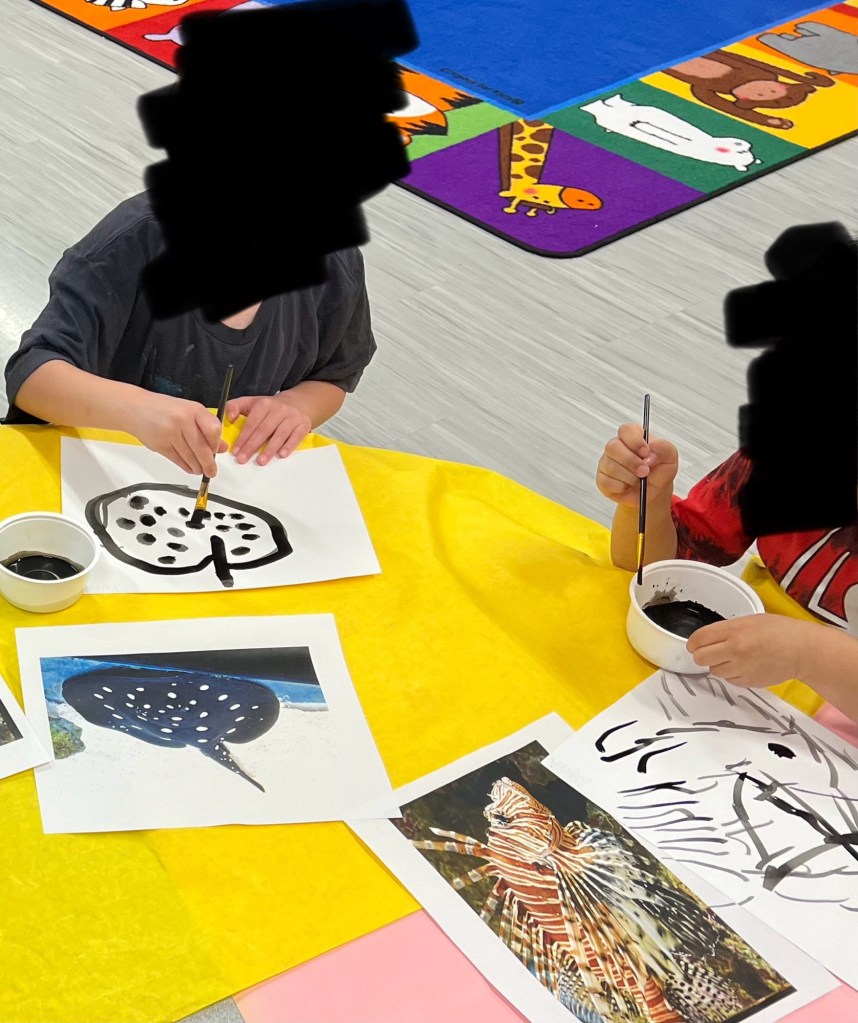
We used India ink to paint fish and when it dried, we added watercolors. Instead of using a set of four-colored watercolor paints, we used a palette of 50 colors to paint jelly fish. We used charcoal and colored chalk to make tigers, oil pastels to create jungles inspired by Henri Rousseau, and India ink to paint toucans. Each time I introduced a new fine art material, I observed students marvel at what the new medium could do:
“Look! These crayons (oil pastels) can mix!”
“I can move it with my hand (Colored chalk)!”
“I love this black paint (India ink)!”
And the supreme compliment in preschool: students requesting to use these materials during choice time.
You likely won’t find a boxed curriculum that puts colored ink and charcoal in the hands of four and five-year-old children, but I encourage you to think outside the box and diversify your preschool palette!
 Paint and Pages
Leave a comment