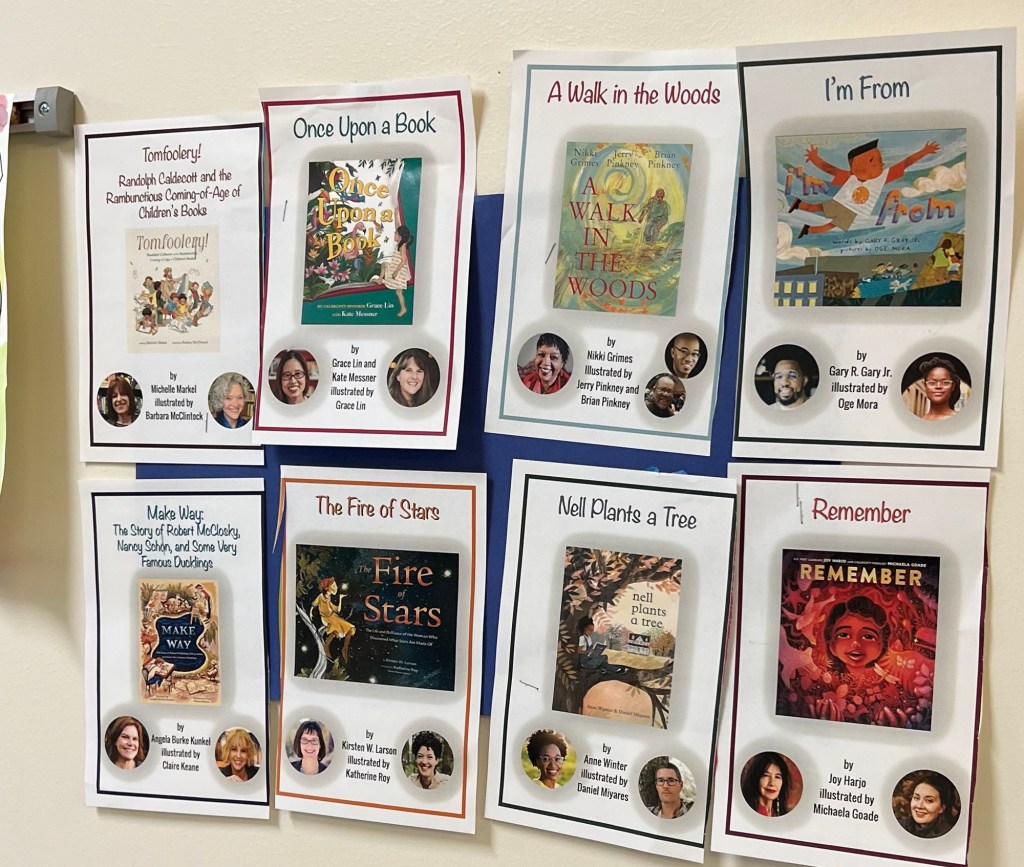
From the end of November until the end of January, my preschool students have been reading books from Colby Sharp and Jonathon Schu’s Mock Caldecott List of potential Caldecott Medal and Caldecott Honor books.
It has been an exciting time! I enjoyed planning lessons and art integration around each of the books. Adapting the Mock Caldecott to the preschool level took a few building-the-plane-as-we-fly-it moments.
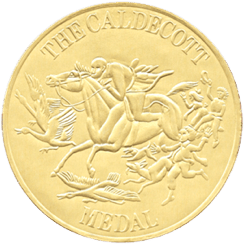
Prior to beginning this challenge, I read my students a handful of Caldecott-winning books. Each time I read a new book, I pointed to the medal on the cover and reminded students that this book was special as it had received a special award.
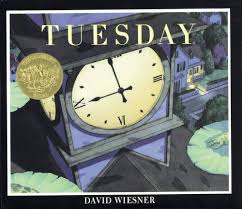
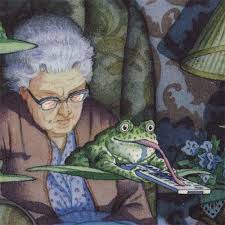
Students really enjoyed David Weisner’s 1991 Caldecott Book, “Tuesday”. This mostly-wordless book was a great example of how illustrations can tell a complex and impossible-to-imagine story. Students also appreciated the humor in the story and pretending as frogs after reading.
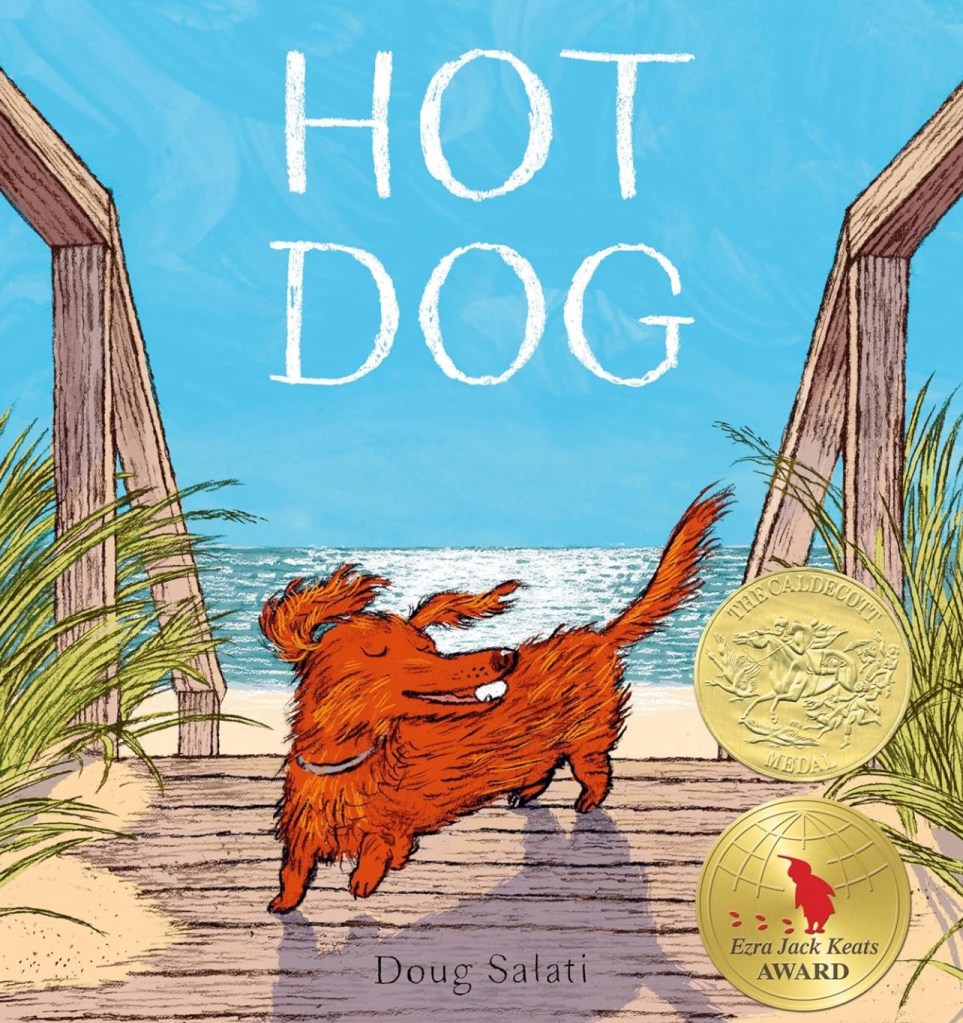
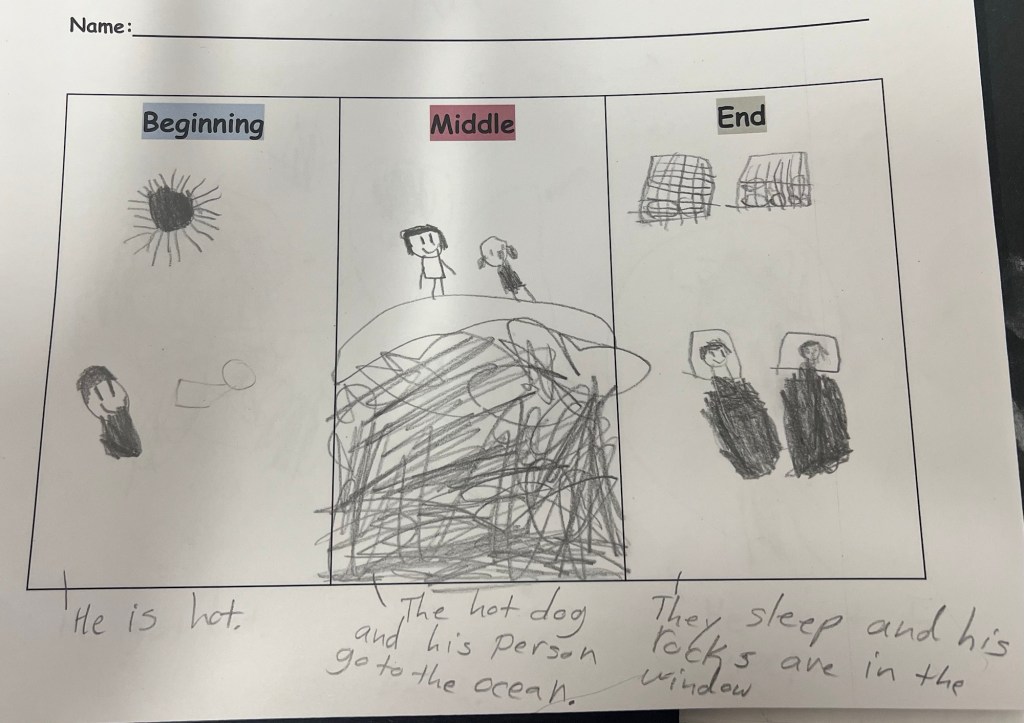
The 2023 Caldecott winner, “Hot Dog” by Doug Salati was another hit with my young students. A lot of this story was told through its perfectly simple illustrations and it was the perfect book to use for a beginning-middle-end retelling. I was impressed with the details my students were able to recall after our second and third read alouds.
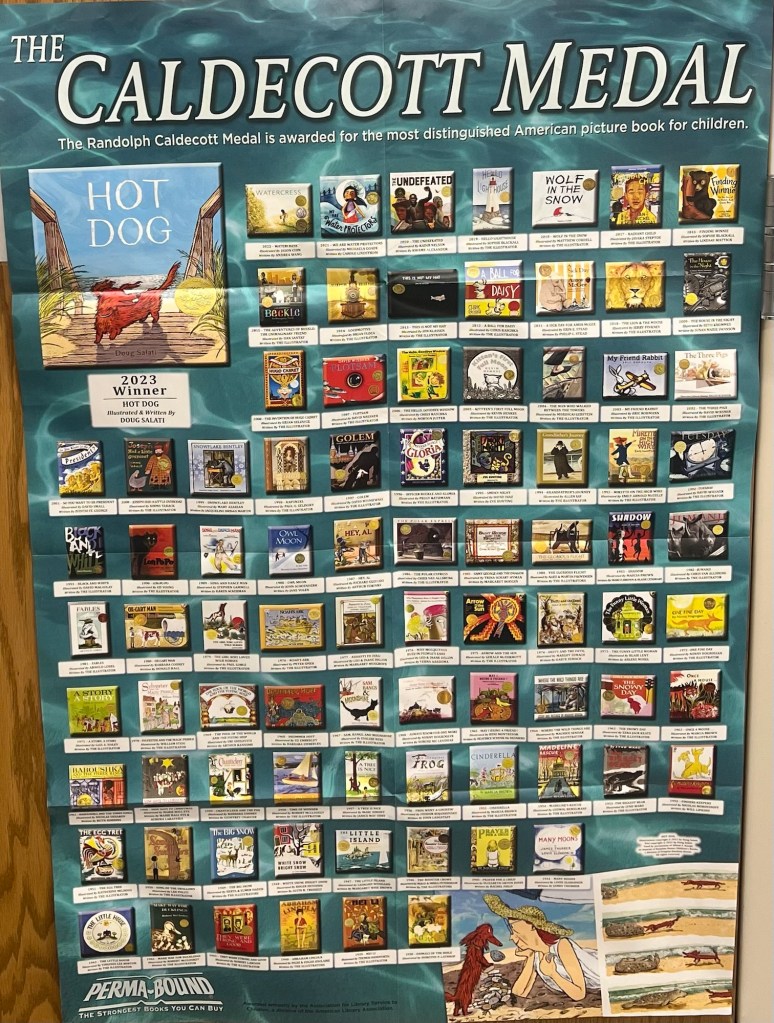
I also displayed the Caldecott poster I received at the 2023 Iowa Reading Conference in my classroom. Students enjoyed finding books we’ve read on this poster. Students also requested to read books on the list that looked appealing. I am so excited to get the 2024 Caldecott poster at the Iowa Reading Conference where I’ll be presenting my work shared on this blog.
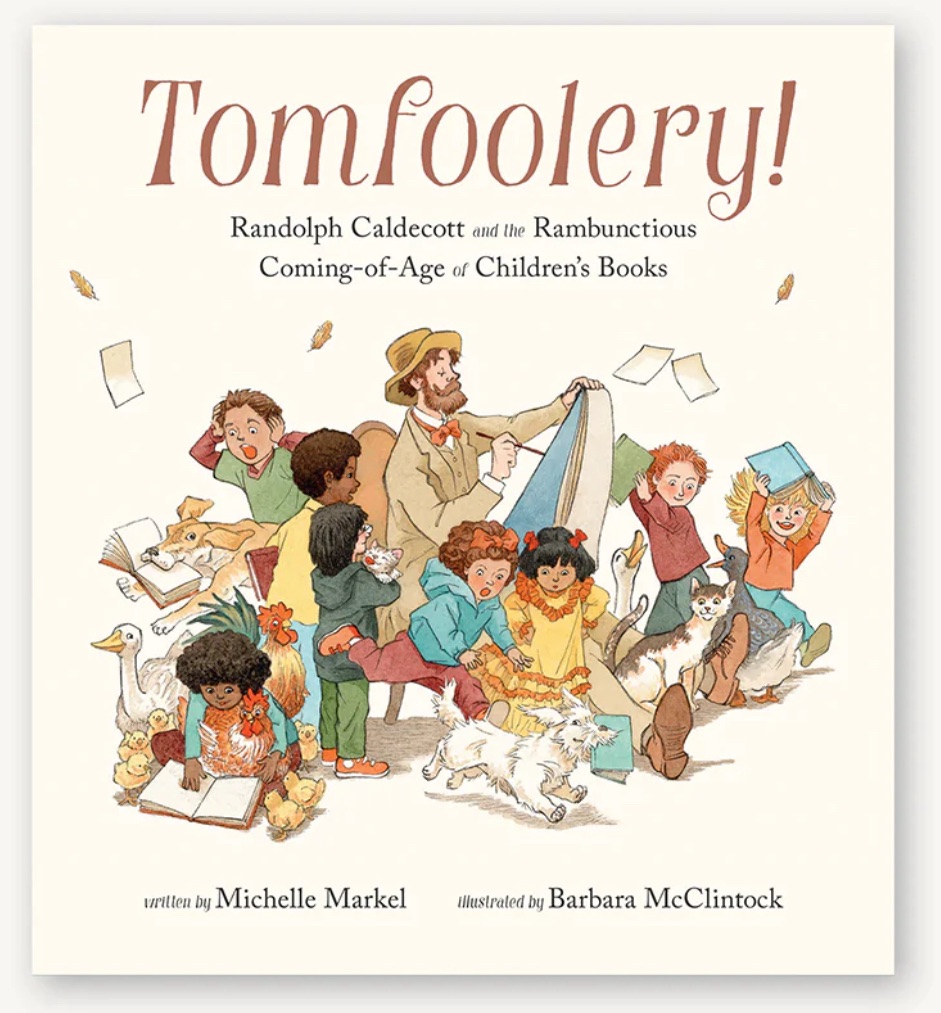
I began the Preschool Mock Caldecott by reading “Tomfoolery” by Michelle Markel. I adored this book because it made me think about a time when picture books did not exist. This book was a perfect introduction to the Mock Caldecott as it explored the life of Randolph Caldecott and the beginnings of the Caldecott Medal. I told my students that the Caldecott Medal is all about the pictures in books and to consider whether or not they help tell the story and draw readers to the book.
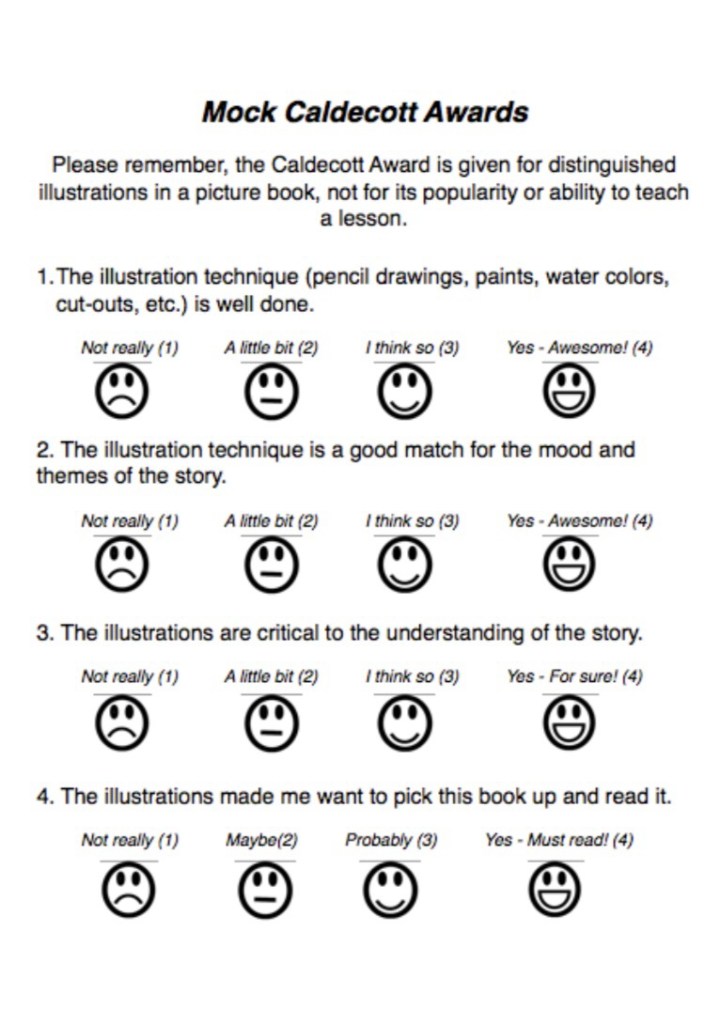
Initially, I tried having students use a rating scale for each of the four judging criteria. Students were to circle the face that represented how they felt about each criteria. After a handful of attempts, I abandoned this way of rating books as it was simply too confusing for students. Many were selecting the face related to the character’s feeling, which provided insight into their comprehension of the story, but made for an invalid illustration assessment.
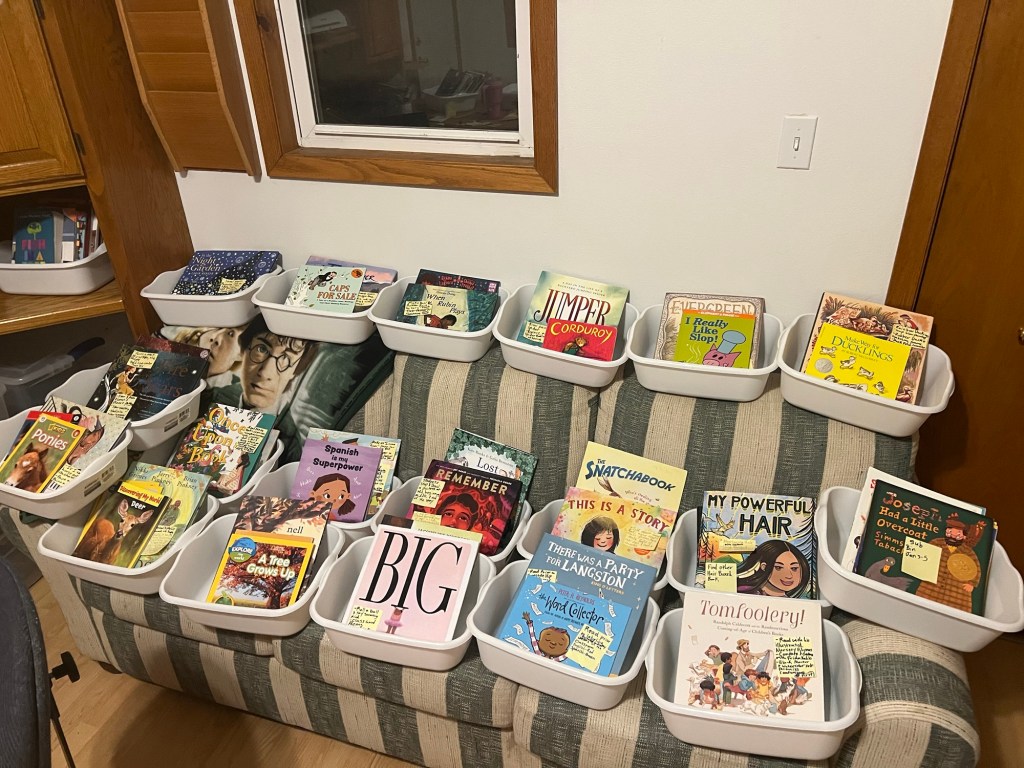
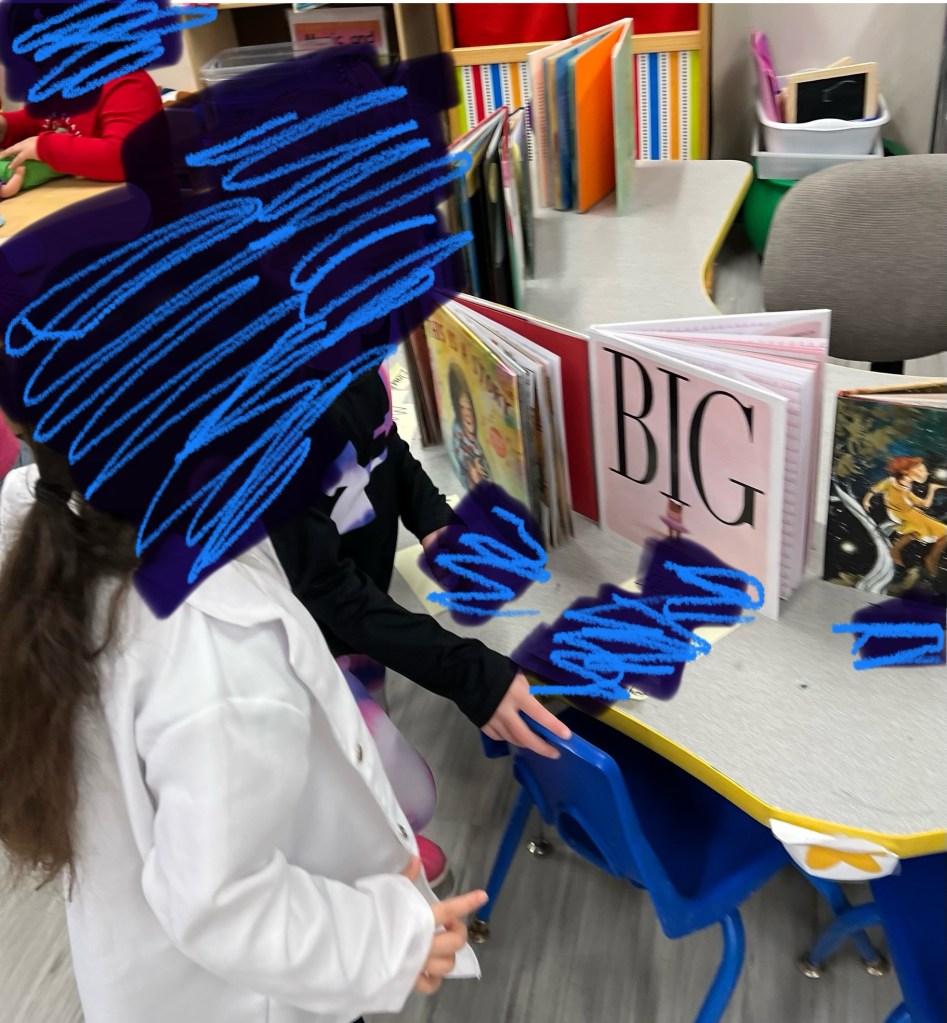
So, I developed a new method for rating books. After we finished all the books, I held up each book one at a time, read the title, and flipped through a few pages to remind students of the story and illustrations. I then called students one at a time to a table where the books were the books were displayed. I had students walk around and look at all the books. I then gave students three sticky notes with their name written on it. One was large and worth three points; this was given to students first and they were instructed to stick it to their favorite book. The other two sticky notes were smaller and they were instructed to find two other books that they like.
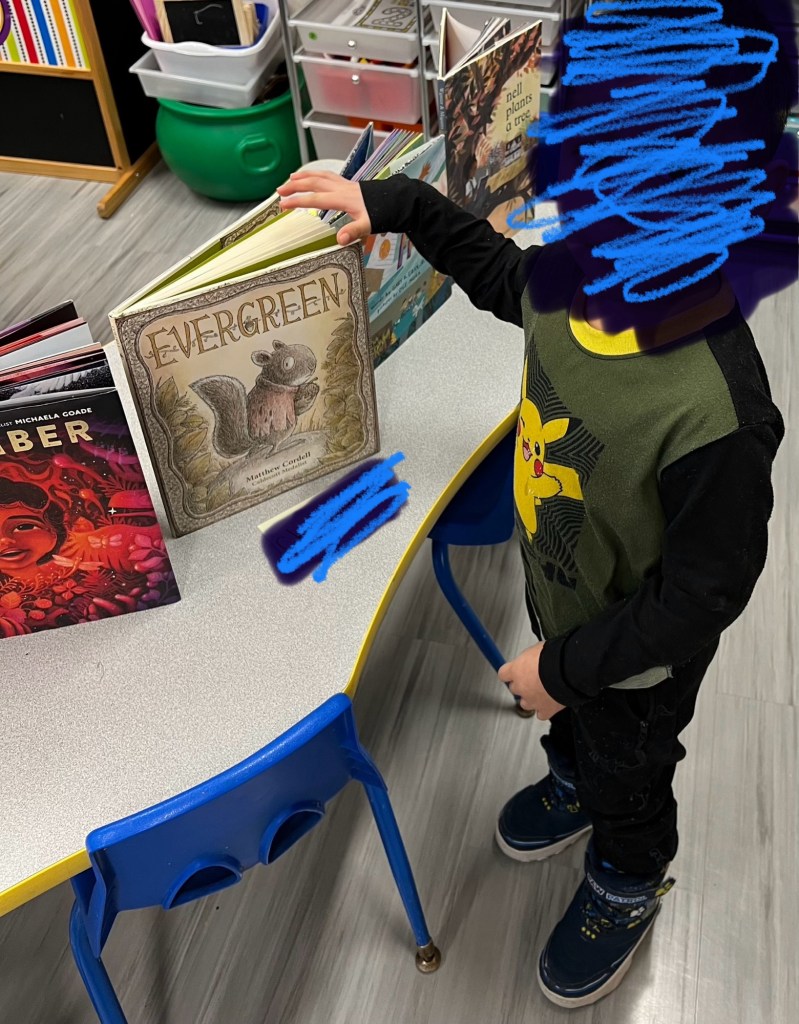
This method worked great! I was impressed by what students were able to recall from books read days to weeks in the past. I also liked having the students come up one at a time as they were less likely to be influenced by their peers.
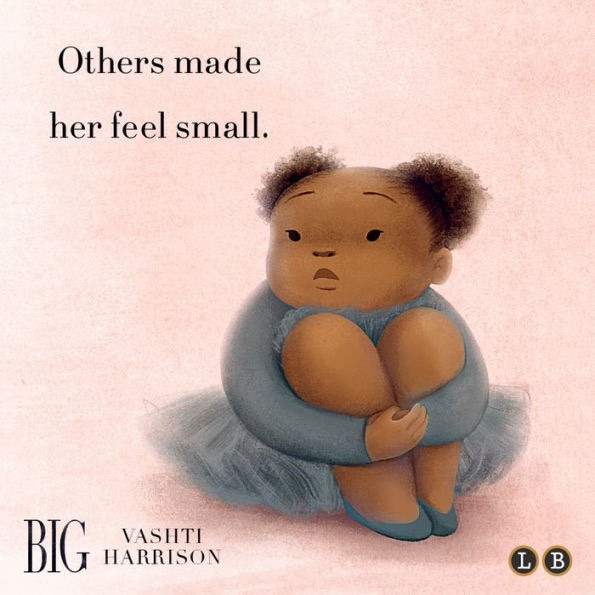
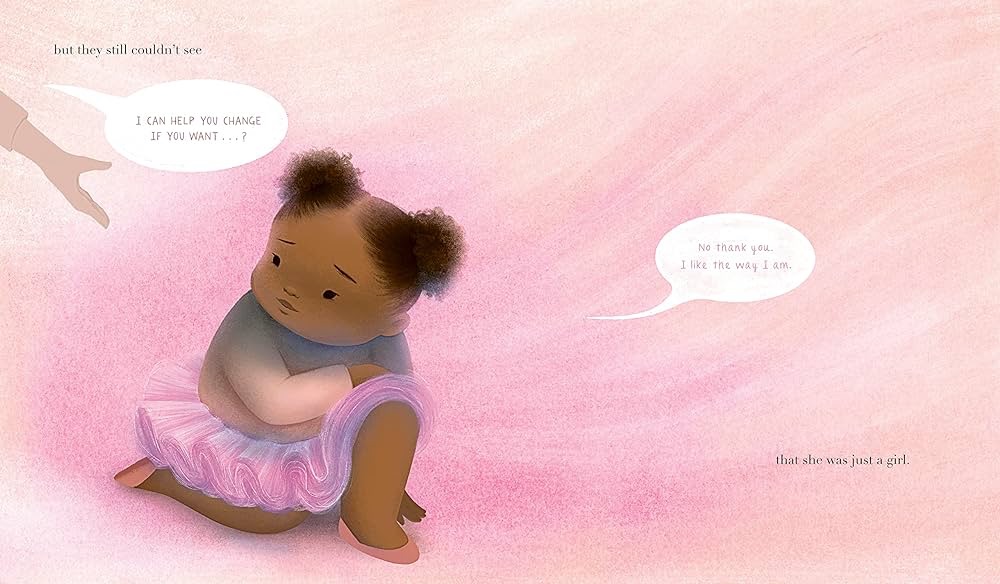
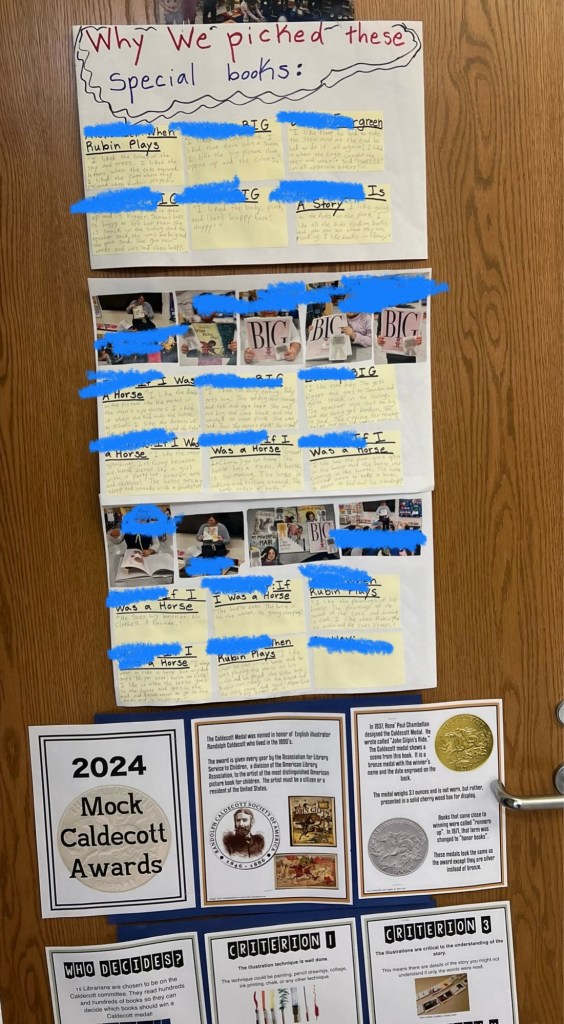
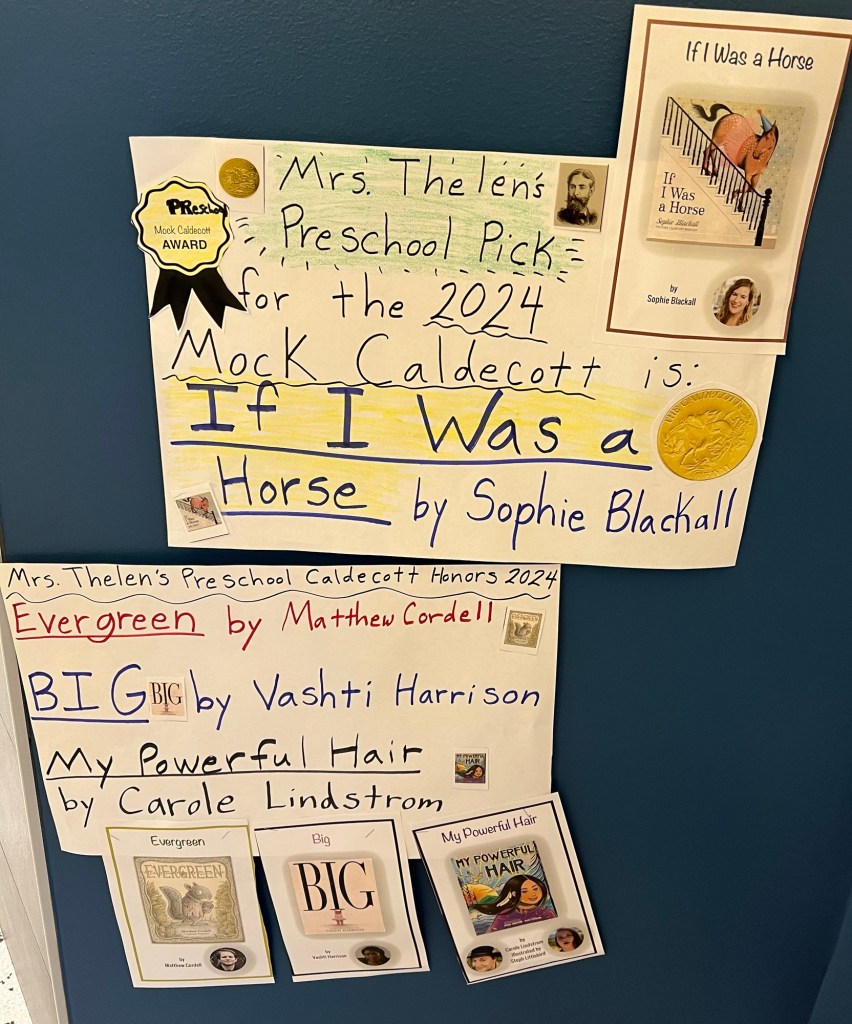
I wrote down what students said about their favorite book and used this to make a poster. I was so impressed by the details my students noticed in the illustrations! Until a student pointed it out, I hadn’t noticed that the main character of Vashti Harrison’s “BIG” turned pink when she reclaimed herself with her own words and became happy.
After voting, the students and I tallied points for each book. The student’s favorite book was worth three points, the second choice book was worth two points, and their third choice was worth one point. The book receiving the most points was our winner and the next five highest-scoring books were our honor books.
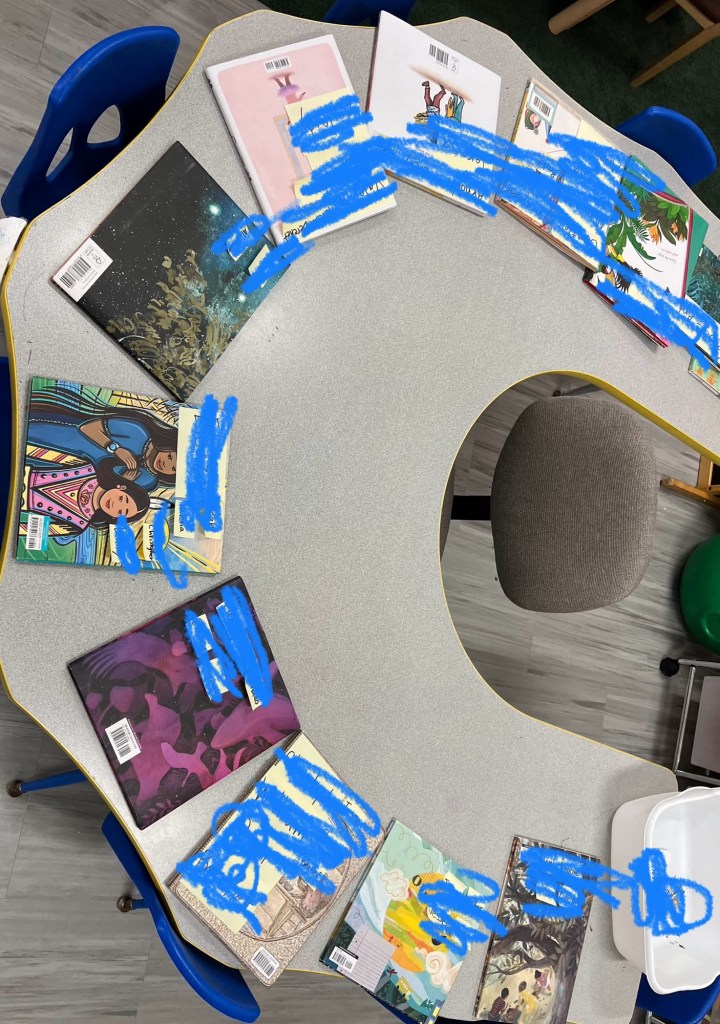
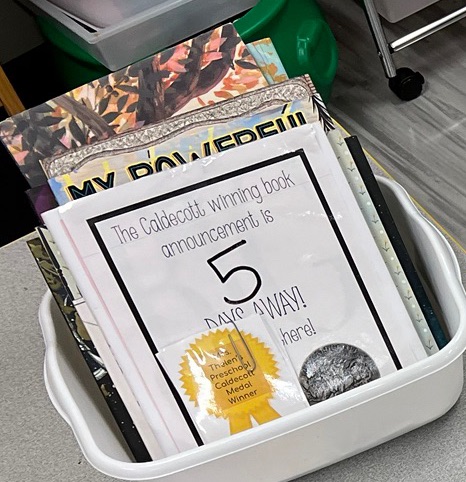
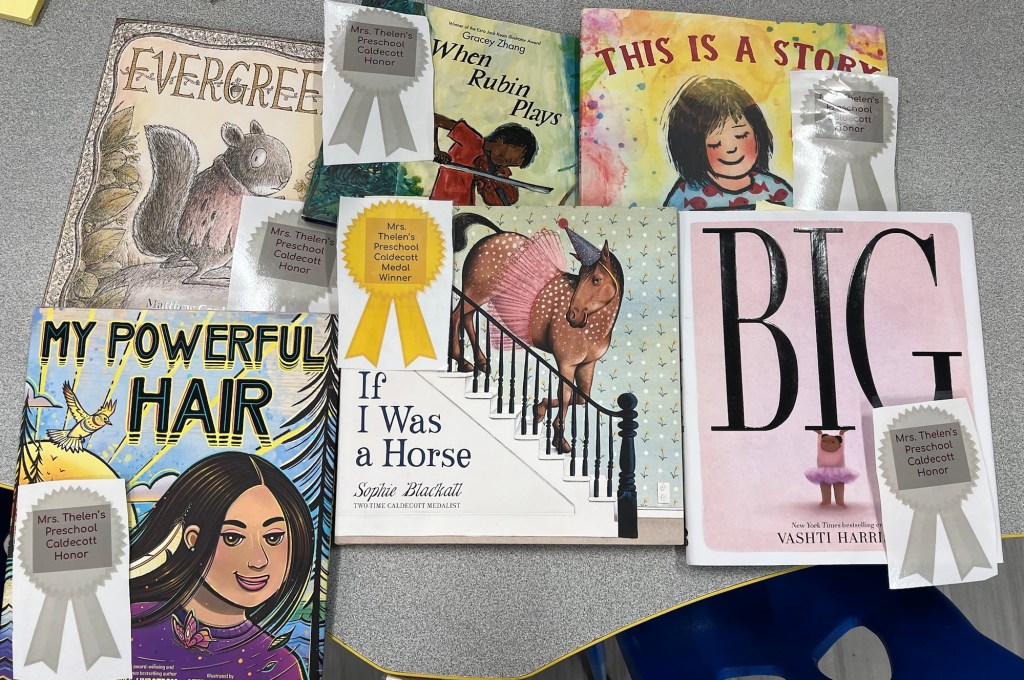
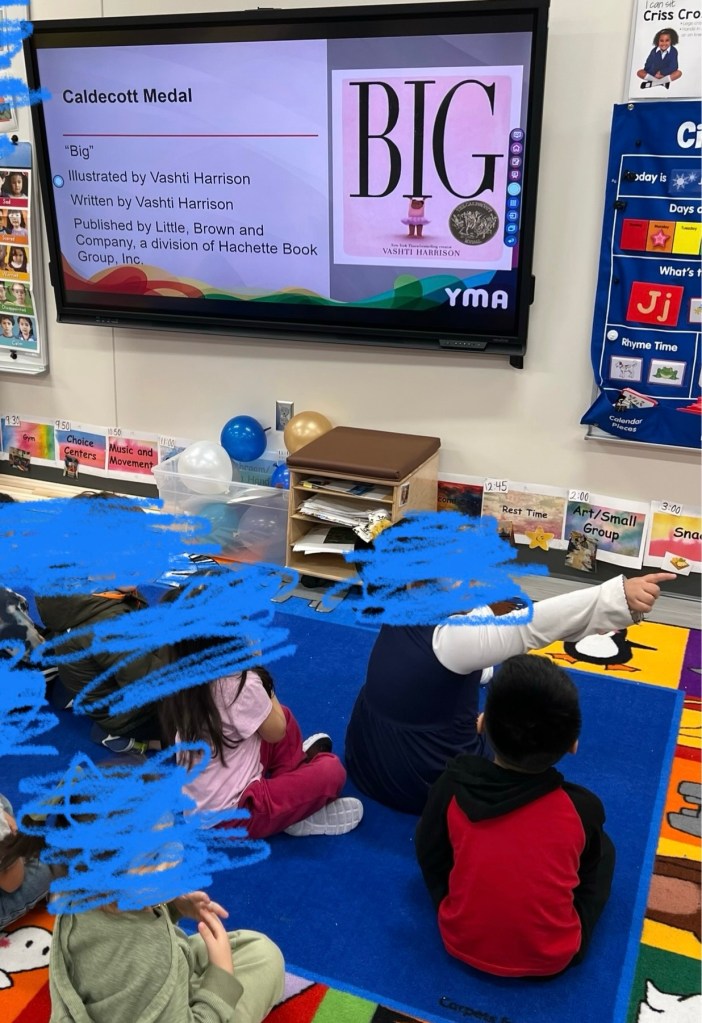
On January 22nd, the day of the real Caldecott Ceremony, we held our Preschool Mock Caldecott Award Ceremony. I had our “Ribbons” ready and laminated, a tub full of balloons for celebrating, and a link to the real ceremony from my AEA librarian friend Anna. We were set!
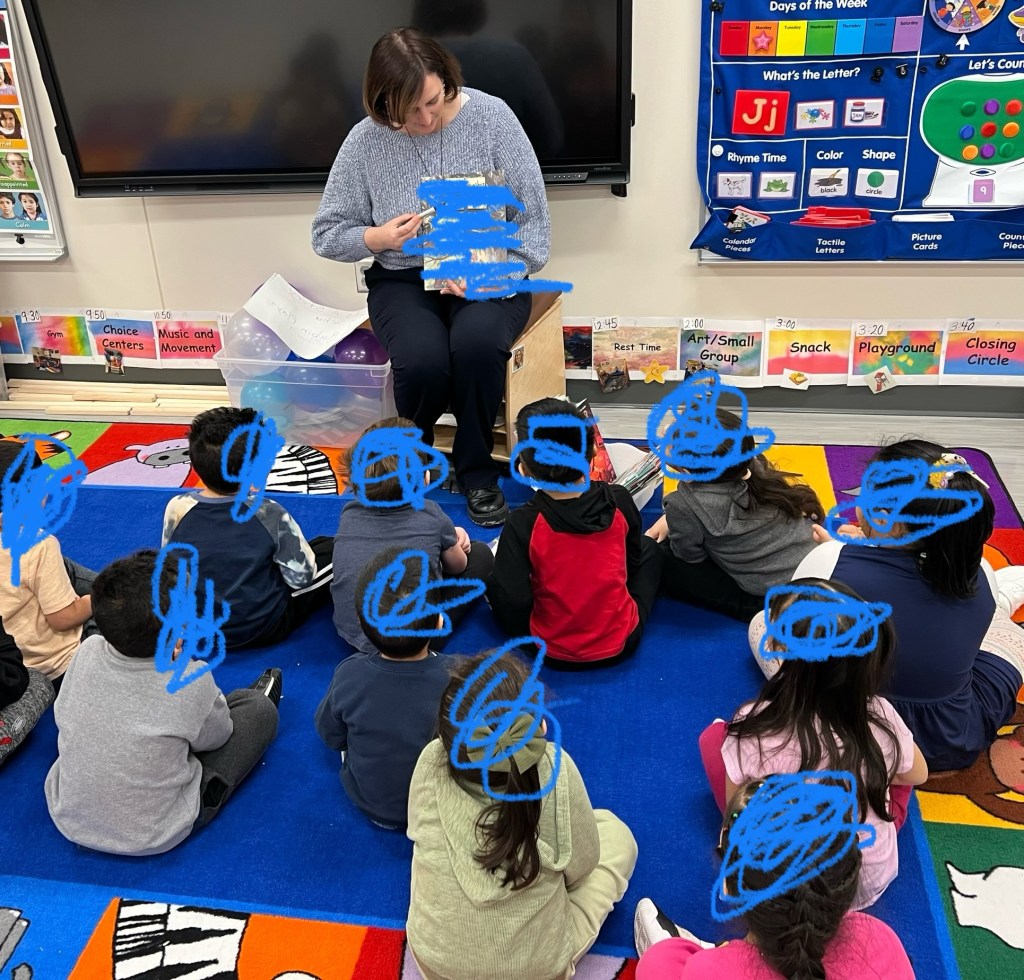
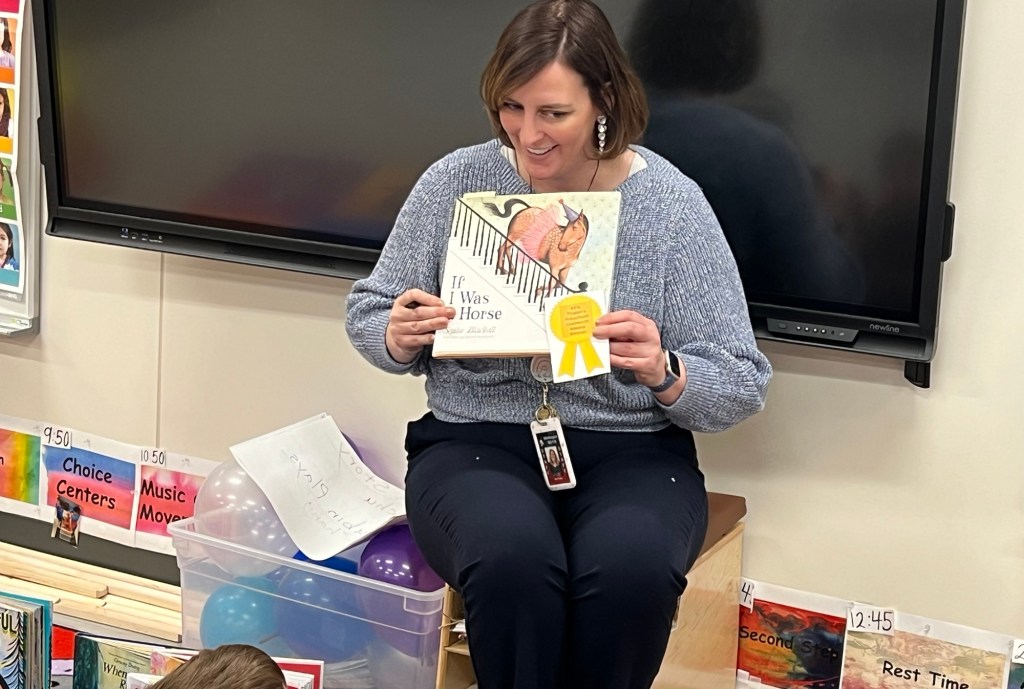
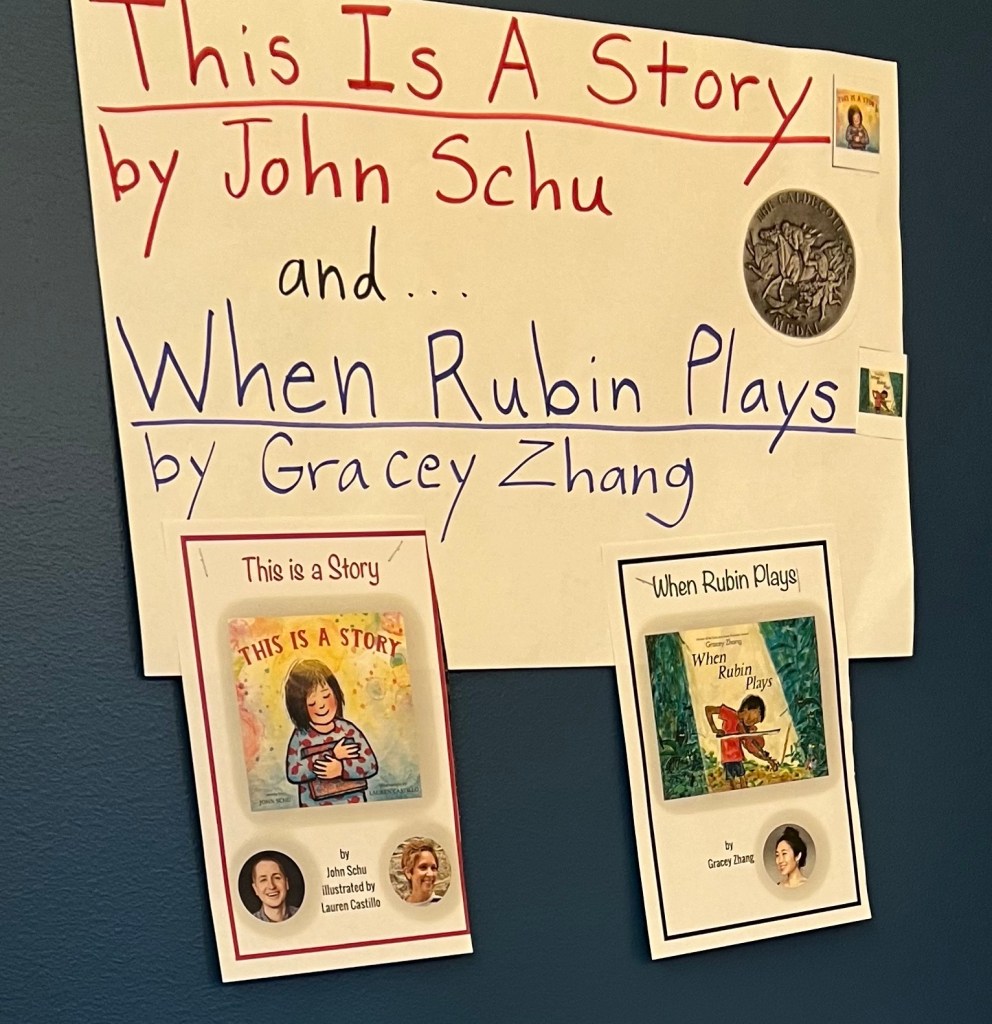
Students were excited to see our winning books! Our honor books were as follows: “My Powerful Hair” by Carole Lindstrom, “When Rubin Plays” by Gracey Zhang, “This is a Story” by John Schu, “Evergreen” by Matthew Cordell, and “BIG” by Vashti Harrison. The winner of our Mock Caldecott was, “If I Was a Horse” by Sophie Blackall. Only one point separated “If I was a Horse” from “BIG” so this was a very tight race!
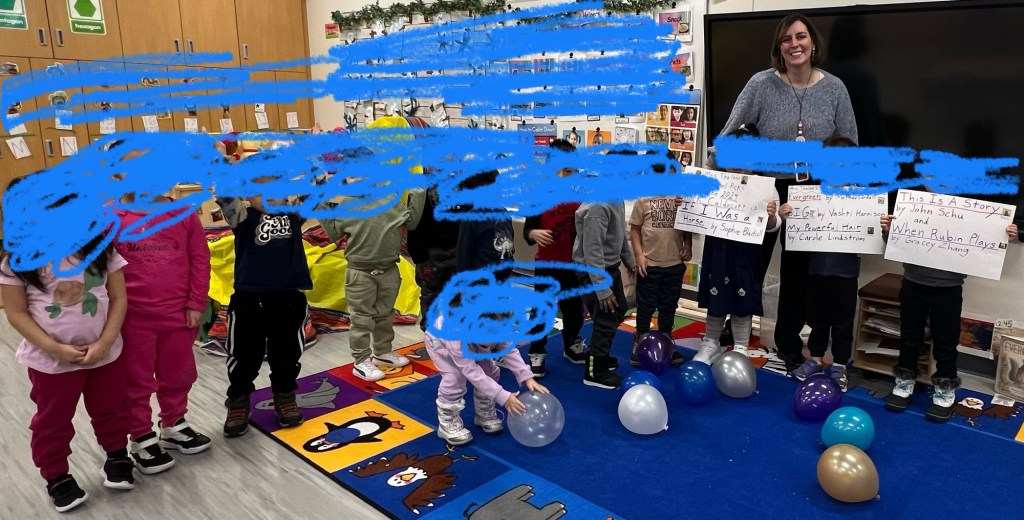
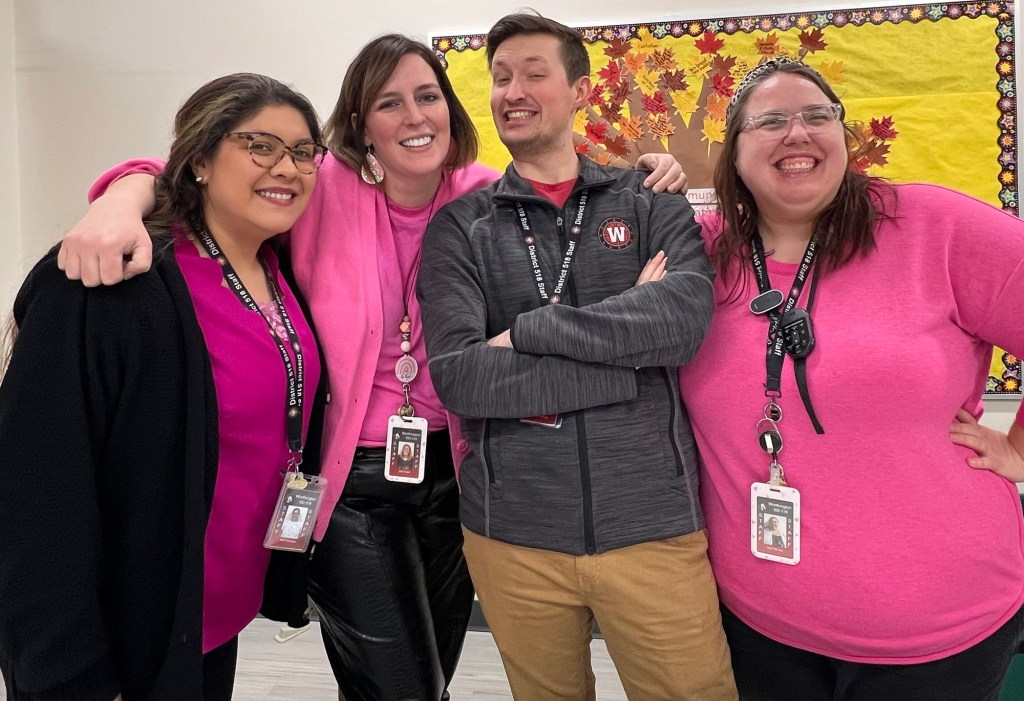
After celebrating our Mock Caldecott winner, the students were looking forward to seeing the real winner. I found out while my students were eating lunch and excitedly ran to tell my colleagues. My colleagues shared my love for the winning book and I knew they’d be excited to hear the news!
When my students woke from their rest time and gathered on our carpet area. I told them the winner and honor books had been announced and now they would find out the real winner! My students who had hoped BIG would win were so excited! Especially my one student who especially loved the book and likely related to the main character. One of my students said, “We almost picked the winner!” I told them there is never a right or a wrong answer to finding the book with the most special pictures. The joy is in experiencing the books and their pictures.
I highly recommend incorporating the Mock Caldecott in your classroom, whether you teach preschool or 6th grade! The Mock Caldecott is such a great way to get students connecting with literature. An Amazon Wishlist or Donor’sChoose can be a great way to fund the book purchase. What I love most about this challenge is that it brought so many NEW titles into my student’s hands. Books that are not part of any boxed curriculum. Books that are new. Books that are as progressive as possible. Books that will help create a kinder tomorrow.


Leave a Reply