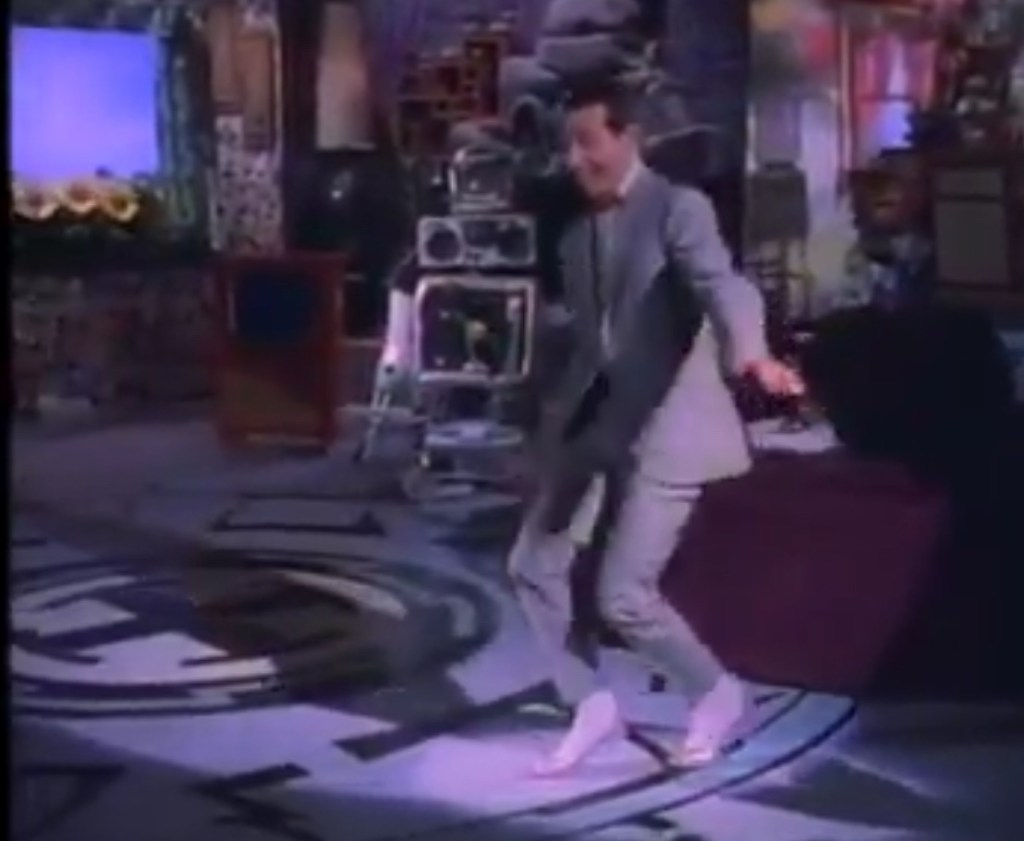
By T.
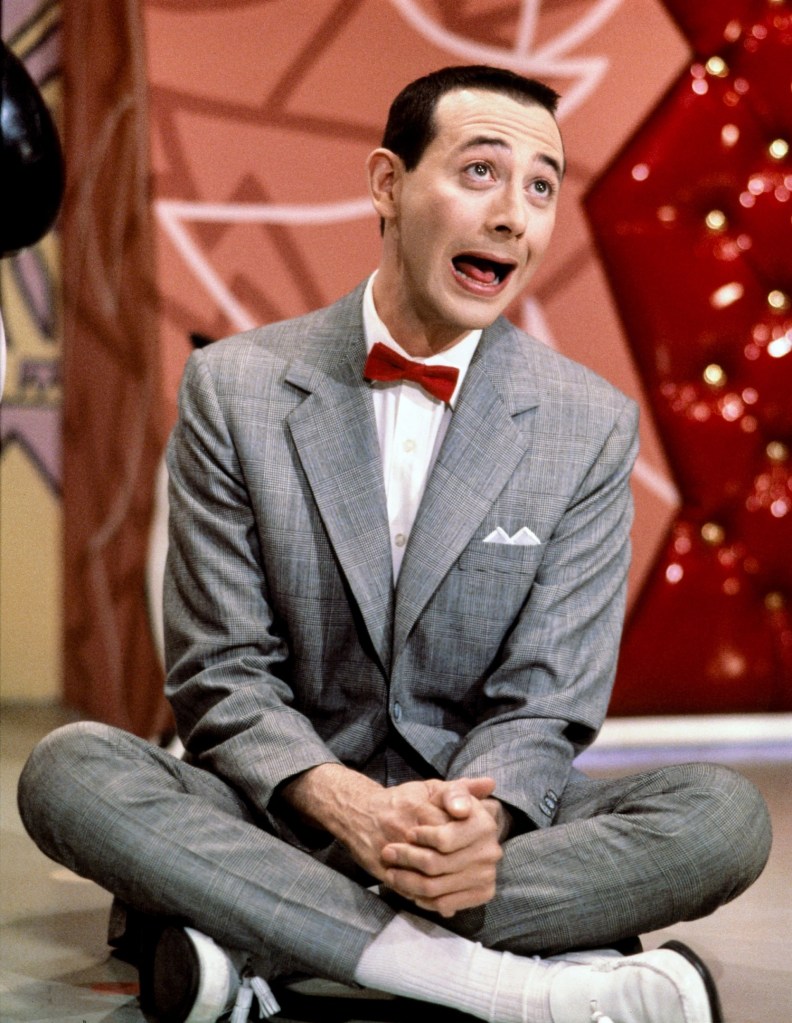
Paul Reubens’ story broke me before I even understood why.
It was 1991. I was six. I remember lying awake on hot summer nights, sweating through an oversized, bright red Apple River Campground t-shirt. We didn’t have air conditioning. I didn’t always know the day or time, but I always knew when it was Saturday; because Pee-wee’s Playhouse would be on.
I was an explosively creative child. So creative, I had trouble existing within the confines of everyday life. I accessorized my dance leotard with pajama shirts. I sliced open my chin trying to shave with my dad’s razor. I belted out showtunes in the bathtub like I was on Broadway. I transformed my bald Cabbage Patch Kid into the villain from Indiana Jones and the Temple of Doom using Sharpies and stolen lipstick.
And on Saturday mornings, I had 30 minutes of pure joy and inclusion, tucked inside a technicolor dream world that made sense to me in ways real life didn’t.
The claymation intro. The cliff and the animals. The talking furniture and animated food. The beatnik puppets and flamboyant cowboys. That playhouse wasn’t just a set, it was a sanctuary. For weird kids. For creative kids. For Queer kids like me, even if we didn’t have the language for it yet.
In the ’90s, Queer kids didn’t have role models. I was called weird. I grew up feeling defective. I didn’t know anyone else who wanted to run around shirtless like my brothers but wear makeup like David Bowie. I didn’t know what I was; I just knew I was other.
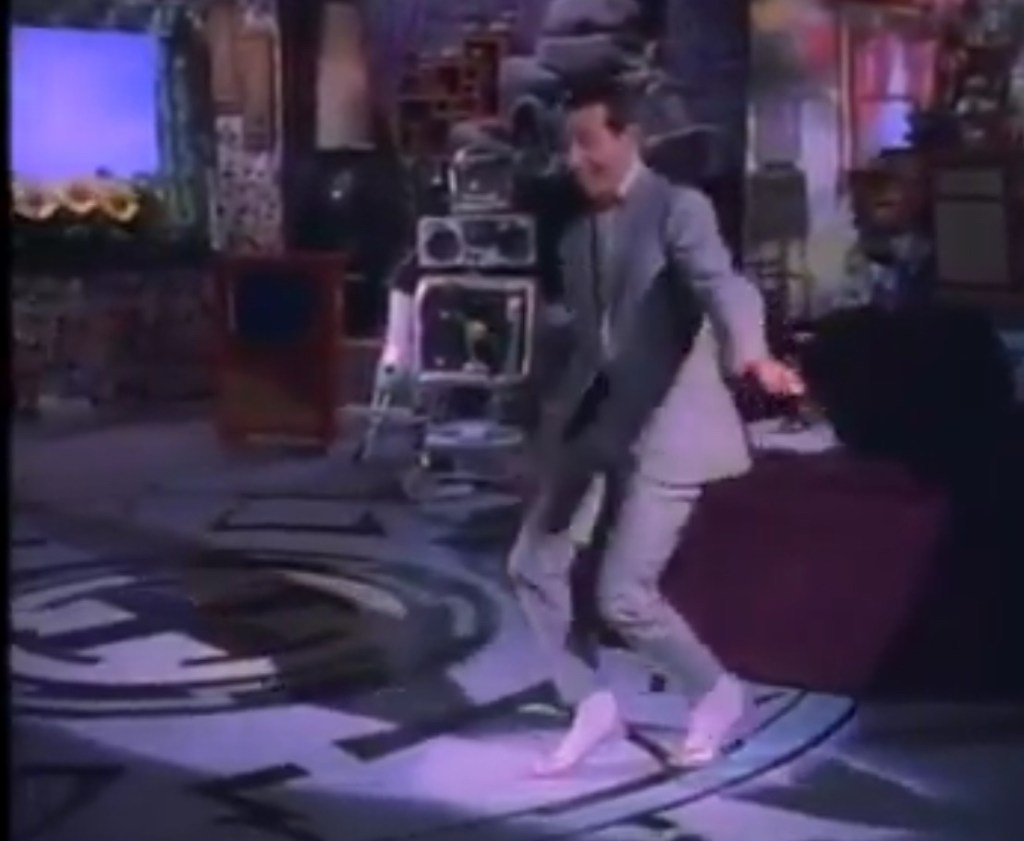
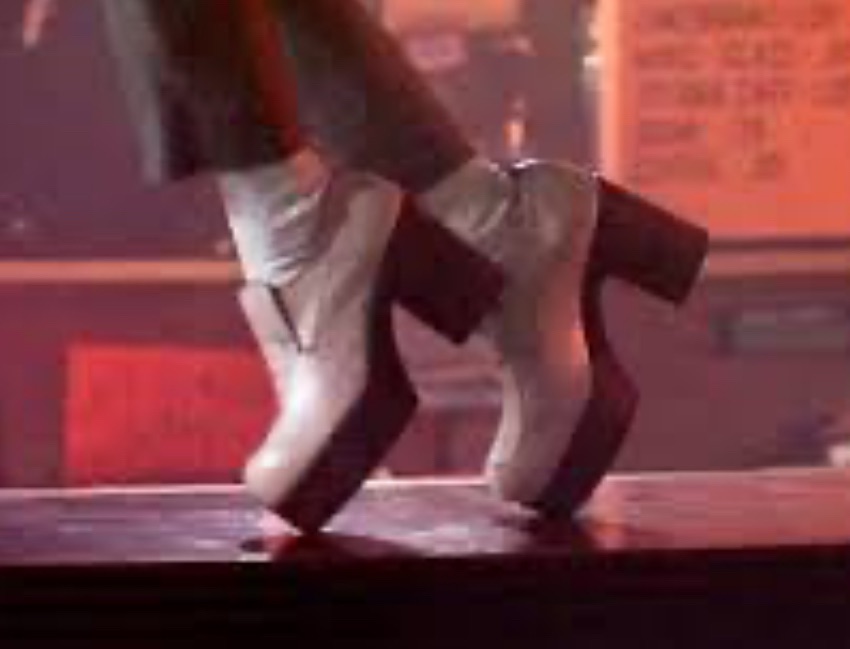
And then there was Pee-wee. Not fully masculine or feminine. Playful, lovable, bizarre. He danced in high heels. He made ice cream and cake pudding. He invited beat poets to perform on a Saturday morning children’s show. He was joyfully, unapologetically himself.
And I adored him.
I devoured Pee-wee’s Playhouse like a lifeline. I didn’t know it then, but it was one of the first places I ever saw Queer-coded joy as fun and creativity presented without shame or apology.
Until one day, my parents were watching the news. Something was wrong.
“Pee-wee won’t be on TV anymore,” they said.
I was devastated. Confused.
“He touched himself,” one of them added. I didn’t understand. Then came more vague phrases: “He showed his privates… people saw.”
I remembered when a babysitter once rushed us out of the park because a man had exposed himself. She was scared.
But that didn’t feel the same. I wasn’t scared of Pee-wee. I loved him.
After that, Saturday mornings changed. No more playhouse. No more friend on TV. Just Pee-wee’s Big Adventure on VHS. I remember staring at a block of cheddar cheese and thinking of the cliffs in the show’s intro. I remember my neighbor’s Pee-wee doll making me sad.
Years later, when I was 12 or 13, FX started airing reruns. It was like finding a part of myself I thought I’d lost. I became the kind of kid who set the VCR to record every episode.
Still, the shame lingered. I felt like I was doing something wrong. When I told people I loved Pee-wee’s Playhouse, they looked at me sideways:
“You’re weird.”
“He’s a pervert.”
“You still watch that?”
I didn’t care.
I loved him. I loved him so much I would’ve married him—just like he married fruit salad.
I loved his humor, his imagination, the joy and Queer-coded warmth radiating from every frame.
I saved up my babysitting money to order a Charlie McCarthy ventriloquist doll from a JCPenney catalogue. He arrived and was everything I’d hoped. Charlie had a monocle, a jaw that moved with a string, and a little book that taught you how to throw your voice. Only one friend was open-minded enough to meet my excitement with curiosity. We practiced making the doll talk, hiding our voices behind our hands like it was magic.
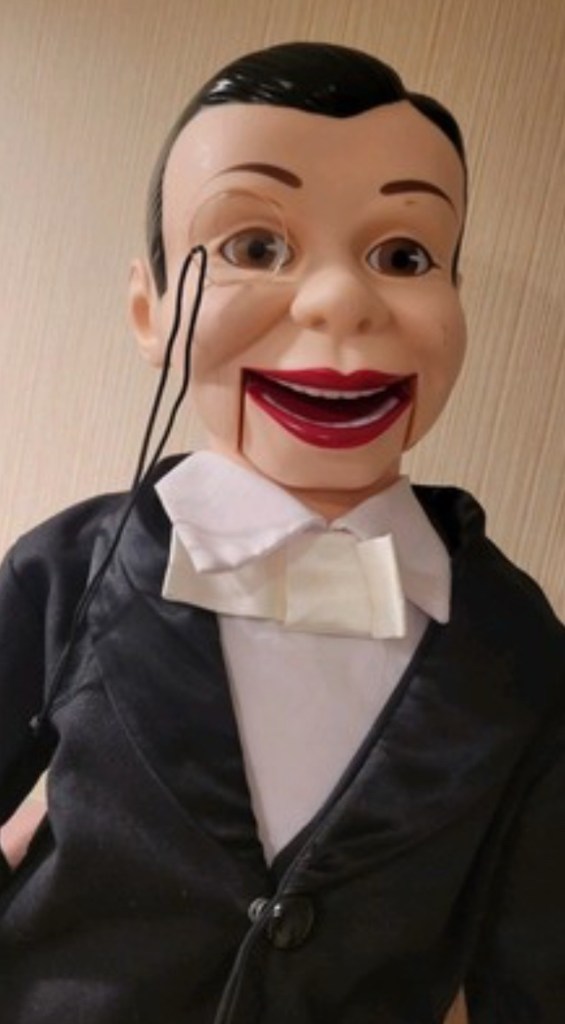
I spent hours on early eBay, longing for the $400 Pee-wee’s Playhouse toy set. I couldn’t afford it, so I settled for the Christmas Special. My older brother mocked me for watching it. Called me a weirdo.
I know you are, but what am I?
In a school computer lab, I searched for answers. What really happened? I read about the arrest. He’d been in a private booth. Watching adult films. Alone. And still, his entire career collapsed. I couldn’t understand how something legal, something private, something so many people did—could destroy everything.
I read on. He was rumored to be bisexual. Or homosexual. Or maybe in a relationship with a girlfriend.
Then I understood.
It wasn’t about what he did. It was about who he was. The makeup. The flamboyance. The camp. The Queerness—spoken or not. That’s what made it so easy to tear him down.
And as a Queer kid, I got the message loud and clear:
If you’re different, the world will turn on you. Instantly. Mercilessly. Shamelessly.
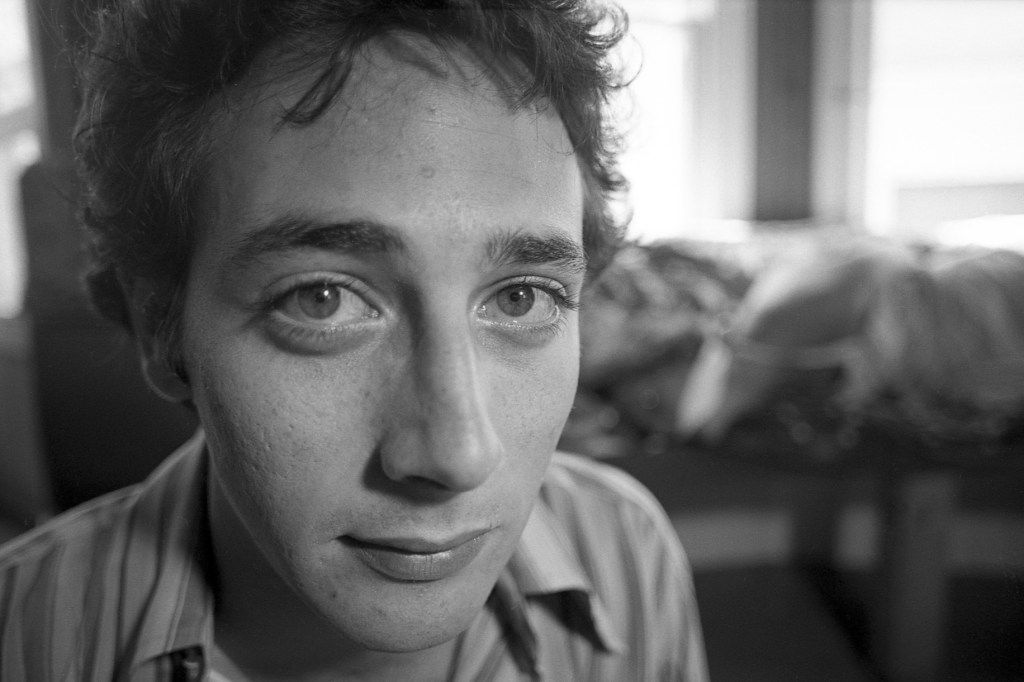
I often thought about writing him. Telling him how much he meant to me. How angry I was at the injustice. How deeply he was loved, even if only a few of us ever said it out loud.
How he helped me love the parts of myself that didn’t quite fit.
I cried so many times thinking about how that must have felt to be Paul Reubens in 1991. To work so hard at your art and have it all ripped away just for being who you are. For daring to be joyful in public.
For being Gay and a children’s television icon.
That’s the cruel irony of it all. The pearl-clutchers thought they were protecting children by erasing a Queer-coded artist from our lives. But in reality, they were harming us by sending the message that we were unlovable. That we didn’t belong. That we shouldn’t be around children.
In 2002, it happened again. He was accused of pedophilia for owning homoerotic art. Not illegal. Not exploitative. Just art. But that was enough. He was forced to register as a sex offender. He took a plea for something he didn’t do.
Paul Reubens never stopped paying for being different.
I know now I may never see the day when my LGBTQ+ community is fully safe. I may die still fighting for acceptance. I worry I won’t live to see even basic tolerance.
But I still hope.
I hope for a future where difference is celebrated, not punished. Where Queer joy is sacred. Where no one is questioned and erased for being who they are and heteronormativity doesn’t get to ruin lives just for being different.
Pee-wee and me is both the peak and the valley. It’s the beauty of what happens when you’re allowed to be yourself, to love, to create freely. It’s the genius that blooms when you’re safe and what’s lost when the world isn’t ready to embrace it.
It’s what happens when you’re forced back into a box that was never meant for you. When the wolves are always waiting for their moment.
Paul Reubens was a genius this society didn’t deserve.
But he gave us joy anyway.
He gave us that magic. That playhouse.
He gave invisible Queer kids like me a place to be free.
To be weird.
To be us.
And I will never stop being grateful.
I hope, wherever he is, he knows how much we loved him back.
“I enjoy getting to be arty and quirky and weird and all the things that I don’t have that much choice with. You just sort of use what you got.”
—Paul Reubens
 Paint and Pages
Leave a comment