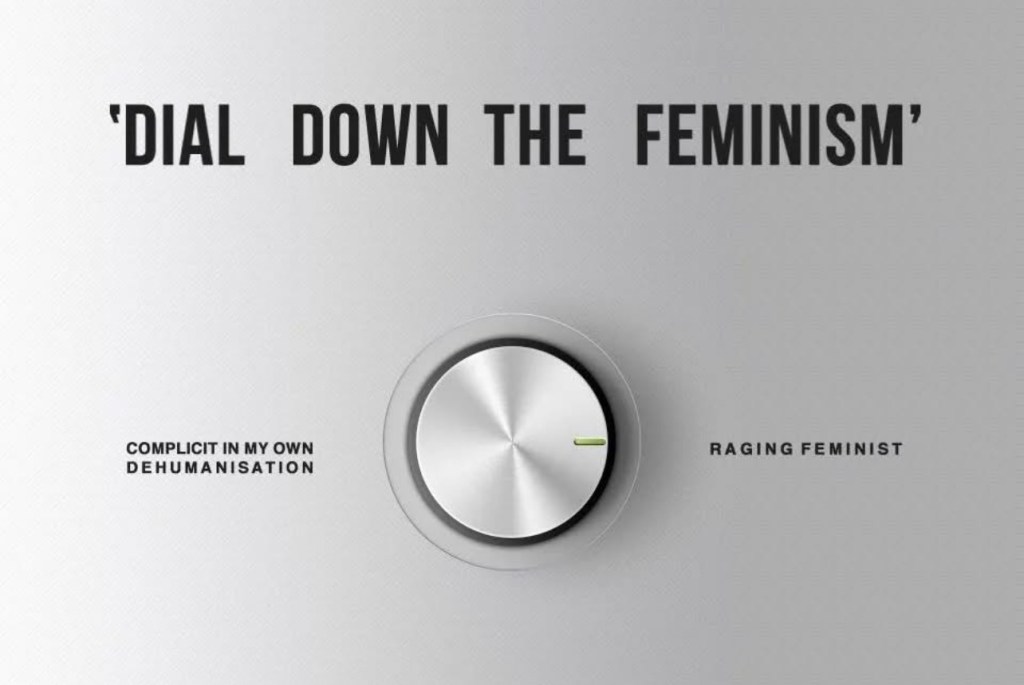
An Open Letter to Men,
I’m here to tell you, as a survivor of rape, sexual assault, domestic violence, and sexual attention that began well before I was psychologically ready to respond, that we could use your support.
You. Men. All of you.
I also want to remind you, because some of you seem confused about this, that women are capable of sexism. Often it’s unconscious. Sometimes it’s not.
Women may believe they benefit from patriarchy. They may participate, thinking this will help them individually. It may, often momentarily. They may benefit from systems of harm and gatekeeping, and in turn, they may bully, criticize, ostracize, exclude, and harm others to keep the machine running. This matters. Female bullying is often covert and thus dismissed by men in positions of power. When women are cut out of positions, promotions, and opportunities through the actions of other women, some men will assume sexism hasn’t occurred because the harm was caused by a woman.
Men, this is silly. Women are capable of causing just as much harm as men.
We need women too. Many women are out there doing great things. Bringing important considerations like intersectional identity into our understanding of sexism. This matters.
A lot.
It’s important to consider that women are constrained by the same system of patriarchy where horrors like online rape academies and monsters like Jeffrey Epstein can exist. Where Dolores Huerta carried her pain for years in silence. We have power, but not nearly as much power as men. We see this when it takes dozens of us to speak up against abuse, the same abuser, and we’re still collectively ignored.
What choices and freedom do we really have? It’s best not to assume unless you’re a woman who has been abused or raped or made unsafe in her own home.
Men, I have an uncomfortable truth I need you to brace yourself to hear.
It’s going to be hard to hear.
You’re going to want to argue. You’re going to want to say how you’re one of the good ones and not all men are this way. You’re going to point to your intersectional identities as proof of your own hardship.
You may want to mention the rarer cases of women who abuse men. You may want to discuss how men have been raped by men and are afraid of being killed by men themselves.
These are all normal reactions. I’ve done it plenty as a white woman. I now ask to be called in when I do so I can fix this.
Notice how my initial reaction centered whiteness.
Notice how, similarly, this discussion of harm against men centers men.
Notice how the discussion of intersectional identity can push the conversation of sexism to the back burner.
Therein lies the problem, folks. We end up talking about discomfort, our harm, and our exceptionalism instead of the conversation that’s long overdue.
It becomes an echo chamber that keeps us from getting to the heart of the problem. Women often step out of it to protect our peace or to make space for voices silenced by identity.
Plenty of men do this because it’s uncomfortable. It’s uncomfortable to realize that many of the things you pride yourself on, your actions, your words, your ideas, the bold, questioning, pioneering, fearless traits that are seen as strengths in men may actually hurt and limit your opportunities as a woman.
Read that again. Those leadership qualities we love in men? Many love to hate those same qualities in women.
It’s uncomfortable to look at your achievements and accomplishments and consider how many women may have been passed over for the same accomplishments, often with stronger achievements, simply because they are women.
It’s uncomfortable to recognize that pregnancy, childbirth, breastfeeding take a toll financially, economically, socially, physically, psychologically, and emotionally, and if you’ve never experienced this, that’s privilege. It’s uncomfortable to recognize that parenting responsibilities are far from egalitarian. We see this in the simple fact that women’s restrooms are where diaper changing tables are located.
That urge to defend your accomplishments is okay. It’s normal.
On behalf of women and girls, I am asking you to be stronger than that urge.
Ignore it.
Sit with your discomfort.
Read that again. SIT with your discomfort.
Notice the urge to speak. Choose to bite your tongue instead. Break the pattern. One conversation at a time.
Do what women often do, or are expected to do, to keep men and women comfortable: swallow it. Keep yourself small here. Sometimes that is the right way to respond when the conversation isn’t yours to join in. This is one of those situations, men.
Resist the urge to center yourself and consider the achievements, choices, opportunities, and accomplishments you’ve reached in part because of your male privilege.
Consider the conversation we need to have: sexism is persistent, harmful, and we’re afraid to talk about it. And it’s continuing to hurt women and girls.
That truth hurts, right? I know a related discomfort. When I consider the role of my whiteness in my high-achieving life, I want to get defensive. Especially as I know being a woman, a Queer, fluid, neurodivergent woman and survivor, hasn’t always been easy. However, I have never experienced racism and have only benefited from my white privilege, whether I acknowledge this or not, the privilege exists.
So, I choose to sit with it as I care more about fighting racism and hate than maintaing my comfort.
I’m still learning. I’m still growing. And I sit with it.
I make mistakes. It often doesn’t feel great. That doesn’t matter. It’s not about me.
It’s honest. And I know the truth will set us free.
Men, standing up for women’s rights will cost you something. Often a big something. Sometimes it’s a little something. But it’s something. Always.
Maybe it’s the jokes you share, the celebrities you adore, the athletes and writers you idolized, or the musicians and comedians who bring you so much joy. Maybe it’s not laughing at a joke in the workplace, not sending that meme or GIF, or making an intentional effort to examine your thinking and patterns. It certainly is eating a slice of humble pie and recognizing that you know very little about what it is like to be a woman surviving systems of patriarchy people don’t understand and often pretend don’t exist.
Do you interrupt women when they’re speaking? Do you think your work is more important than the work of the women around you? Do you say you’d rather hire a young woman than an older woman? Do you discount women’s experience and expertise?
Do you assume you know just as much about the lived experience of women even though you’re a man? That’s a problem. Stop doing it.
When a woman tells you something about herself, do you make assumptions? Probably. What are those assumptions? Interrogate that honestly. Fight the urge to deny.
If a woman calls it in, is your urge to attack and punish the woman? Is the discussion of harm met with more harm? This is gross. Stop doing it.
If a woman says she was at a university before another university, do you assume she was a student before considering she was a faculty member? Do you prescribe advice before considering if it’s even needed? Do you argue with women about their lived experiences, boundaries, feelings, and gut instincts? Why? Is it because you assume yourself to be the expert? Are you?
Or is it simply because you’re a man?
We see this in the United States. Our president has a criminal history of gendered harm. He has said things to normalize violence against women and sexual assault. Twice, he was elected as president despite more competent women running as his opponents.
We have never had a woman elected as president of the United States. Yet plenty of men scoff when women point out that it’s hard to advance professionally as women.
Do you dismiss women when they tell you parenting takes many hours each week? It is a gift and also a constraint on time and ability to work without interruption. Unless you have children, it’s best to remain silent in these conversations. We all were perfect parents and balanced work and life beautifully before we became parents.
Do you take advantage of women’s time and labor? Do you suggest professions and opportunities to women that you wouldn’t consider for yourself as a man? Do you share opportunities with your male colleagues that you wouldn’t share with women? Do you ask women their thoughts and not credit them or reimburse them for their time and labor? Do you quote women without citation? Share their words without adding their name?
Do female colleagues have to prod and remind you to do your portion of a shared task while you prioritize supporting male colleagues and your own work and professional advancement? Are you most comfortable being in spaces surrounded only by men? If a woman tells you about oppression, is your first instinct to deny and argue? If a woman speaks her truth, her observation, her pain, and her experience, do you dismiss, question, and minimize? Do you prioritize your perception of the experience even when you were not there? That keeps women voiceless. We stop talking to men when they do this. We stay quiet.
Stop doing it.
So be strong. Be brave. Stop doing what’s easy to do. Humble yourself and listen.
We women risk everything by speaking up. Everything. You risk things too. The risk and power imbalance is uneven and you can use your make privilege here to support us.
Not to rescue us. Not to dictate. To listen. To support. To speak alongside.
But only if you you’re strong enough to sit with your discomfort.
Signed,
T.
 Paint and Pages
Leave a comment